
sofia
sofia qadir tak , jammu & kashmir


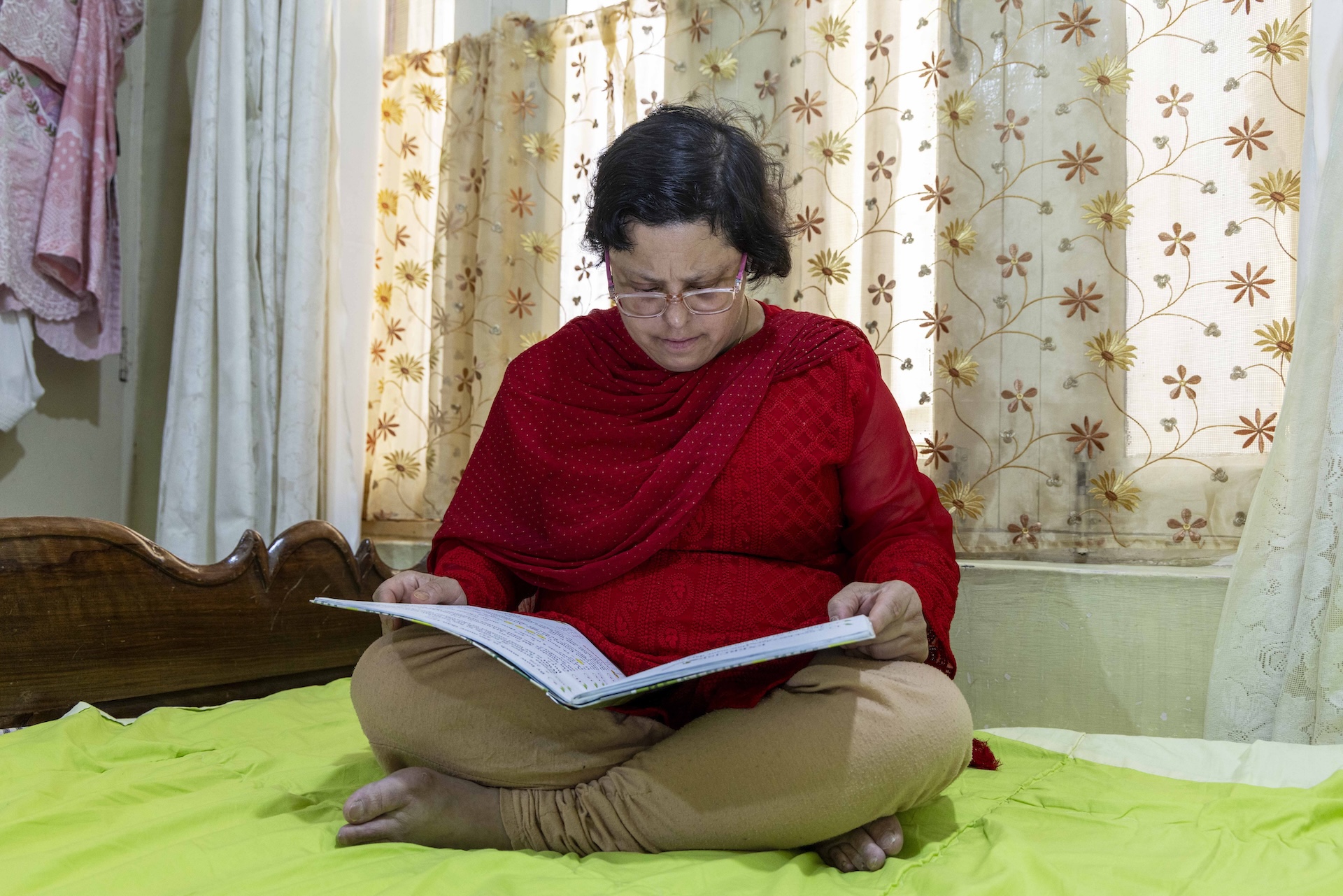
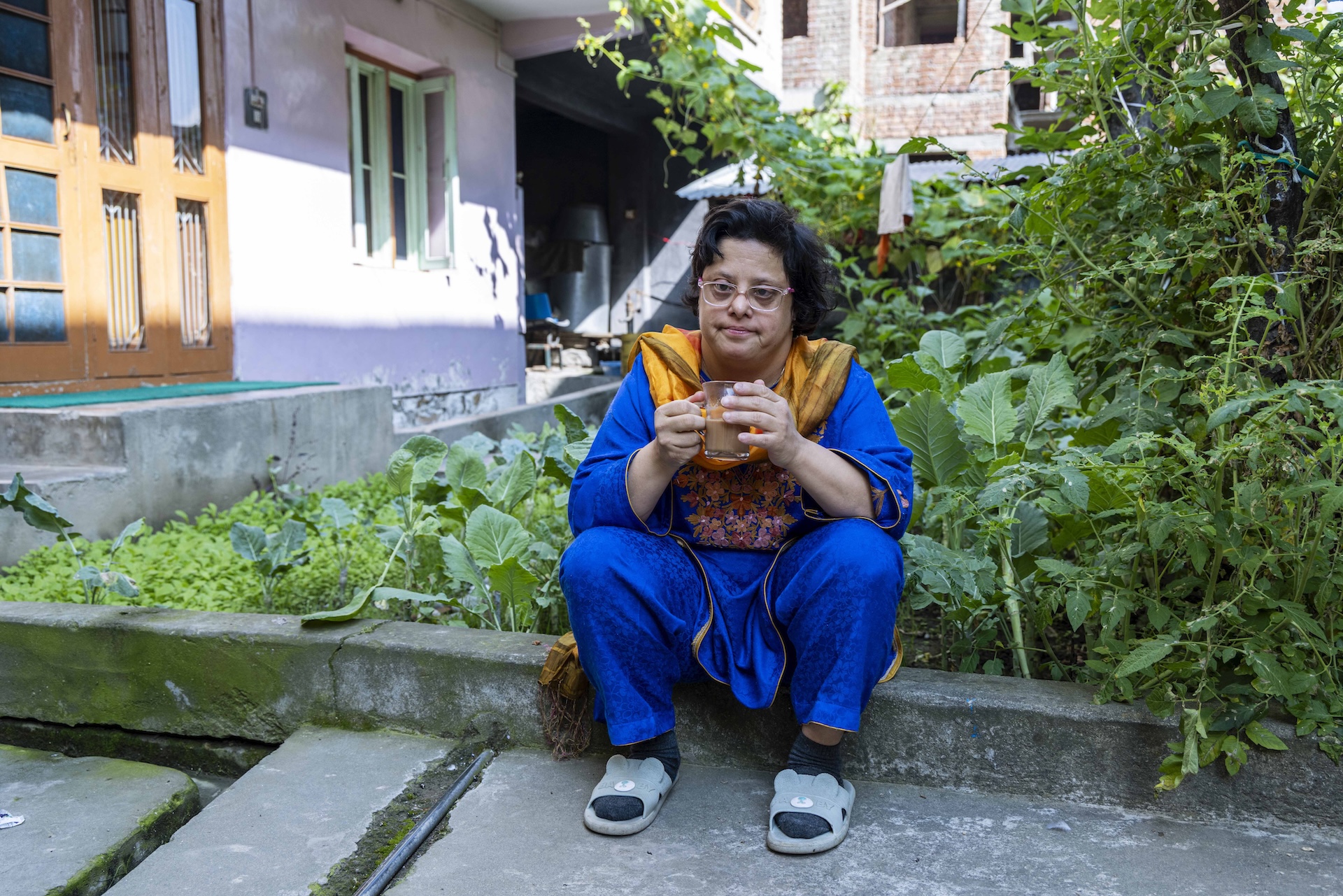
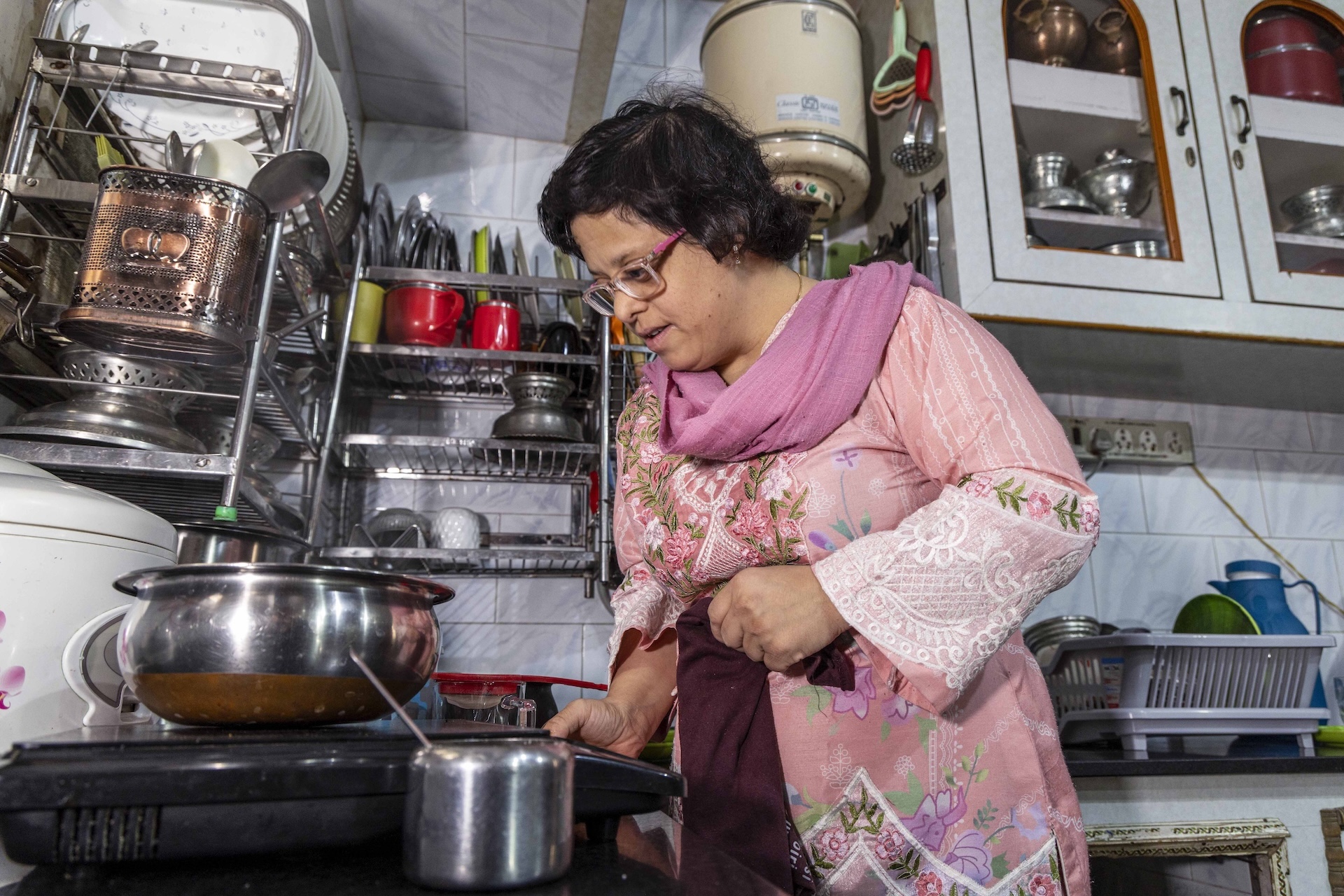
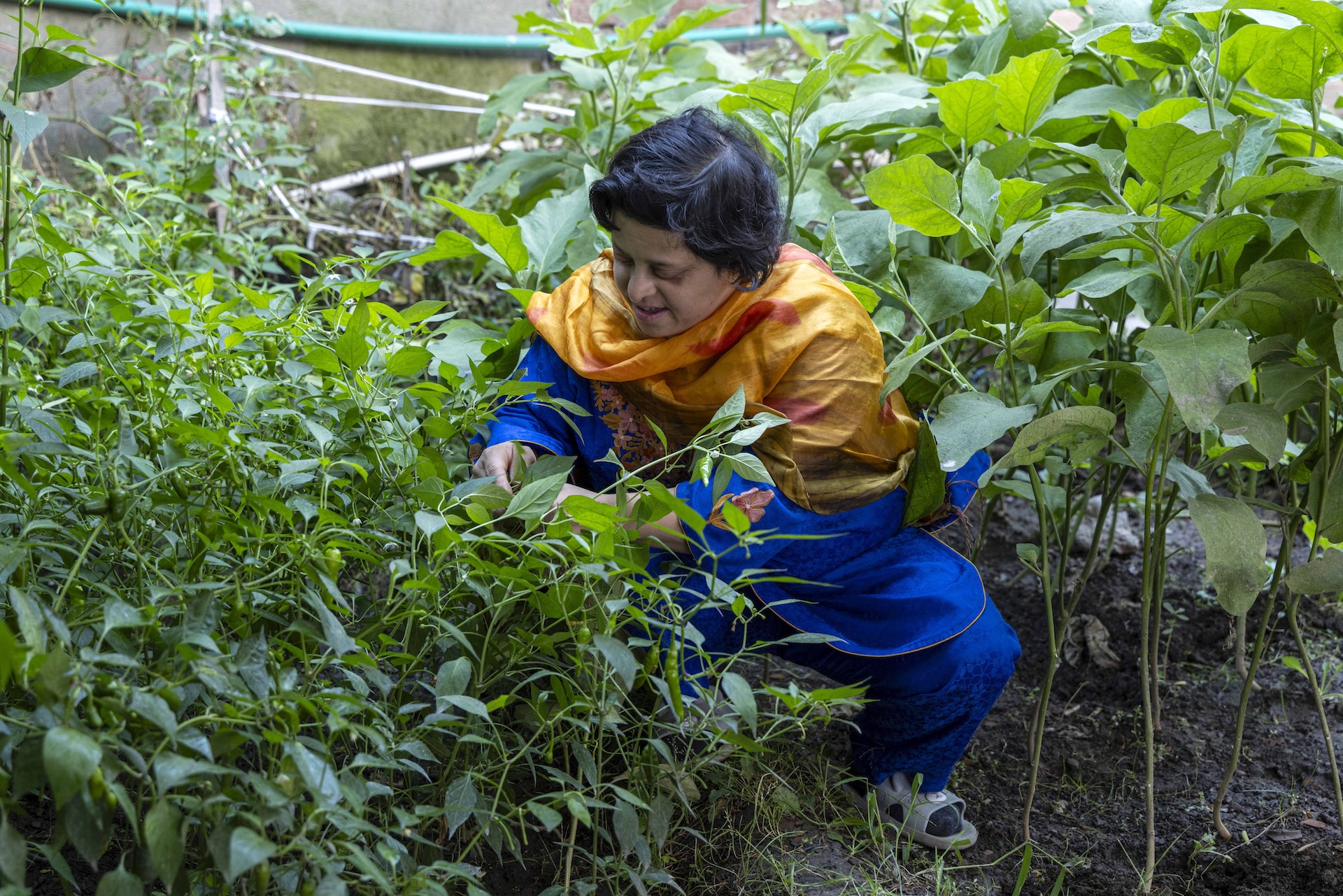
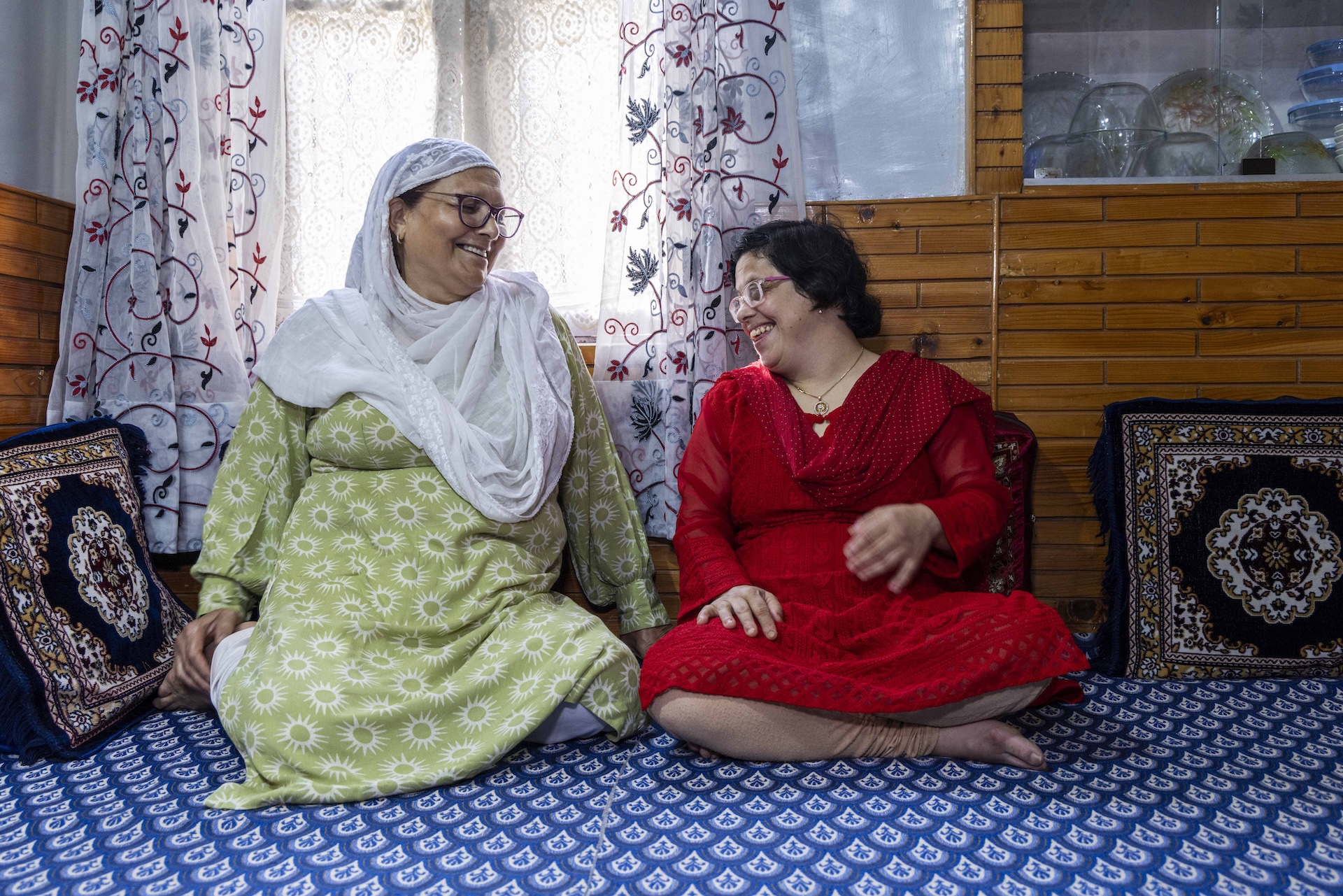
“Everything makes me happy! Cooking, dancing to music, watching TV with my mother”
Twins tend to be fiercely attached to each other and Sajiya and Sofia from Jammu and Kashmir were no different. “Even when we were kids, if I saw any person insult Sofia in any way I would pick up a fight with them,” says her sister. Why would anyone insult a child? There are many who snub or mock or rudely comment on those they perceive to be intellectually disabled. Sofia (46) has Down Syndrome.
Dr Sajiya is now a dentist who lives in Srinagar; she and her husband, a professor of orthodontics, work at the same government hospital and they have two sons, Rehaan and Ruhaan. Sofia lives with their mother Haseena Jabeen (71) in Bijbehara (their father Ghulam Qadir Tak, a venerable political and social activist, died in 2017).
Haseena recalls Sofia’s early years and her delayed milestones: “People used to tell me, she can’t talk, she won’t walk, but I refused to listen. Her first word, which she uttered much later than usual, was ‘ball’ because she used to like playing with it. I wanted to put her in the same school as Sajiya and my eldest, Mudassir. Initially the school refused but I fought with them and they agreed. I also taught her at home.”
Sofia failed her 10th exams in the first attempt, and on her second, Haseena requested the board of examinations to allow her to be the scribe, promising she would write only whatever Sofia dictated. She failed by three marks so the board gave her three grace marks and she passed matriculation. She also did a computer course. Sajiya went to Patna for her Bachelor of Dental Surgery course. Mudassir did his MBA in the UK, worked in Delhi for five years and then started a business in Dubai.
As part of a joint family the children were surrounded by loving aunts, cousins, grandparents – you name it. Sofia had no lack of caring hands that tended to her every need. Haseena says, “From my parents’ place in Budgam I used to take her to the speech therapy centre everyday by bus and my mother and my aunt would come along. My aunt used to take care of everything – seeing she got her milk, her soup, her juice at the right time.”
“Mother has been her champion throughout,” says Sajiya. “She made sure she received the best counselling and medical treatment. She would take her everywhere – to social gatherings, family functions. For Sofia, mother’s words are like ‘pathar ki lakeer’ (line drawn on stone).” Haseena adds fondly, “Even now if I step out for something she will call me hundred times wanting to know where I am and when I am returning. Even if I am in my room upstairs and she can’t hear me, she keeps calling out repeatedly, mummy are you ok, mummy are you ok.” Sofia adores her nephews and the younger, Ruhaan, who has ADHD, is particularly close to her. “We keep visiting Sajiya,” says Haseena, “and when it’s time to leave the children beg me, let aunty stay here!”
“Mudassir visits us around five times a year,” says Haseena. “Sofia and I visit him for a month in summer and three months in winter. Sofia enjoys being in Dubai, wearing the local mode of dress, walking about freely on her own.” At home, she is extremely disciplined, follows a rigid schedule, is health-conscious and strictly monitors her weight. After sharing a green tea with Haseena in the morning she takes a 40-minute walk in the garden before eating breakfast.
Speaking to us in Kashmiri translated by her mother, Sofia said, “I like watching TV with my mother. I like cooking and biryani is my favourite.” And what are the things that make her happy? “Everything!” she said. Haseena laughingly remarked, “She listens to music and does disco!” While she remains cheerful overall, she sometimes goes all quiet and Haseena, fearing she might slip into depression, urges her to talk. Sajiya shares that her sister is undergoing an emotionally fragile period, perhaps as a result of perimenopause. “We’re going through this together and getting to understand its impact,” she says.
Different but the same – that’s what these twins are. And bound together for life.