
sangeeta
sangeeta vishnoi , rajasthan

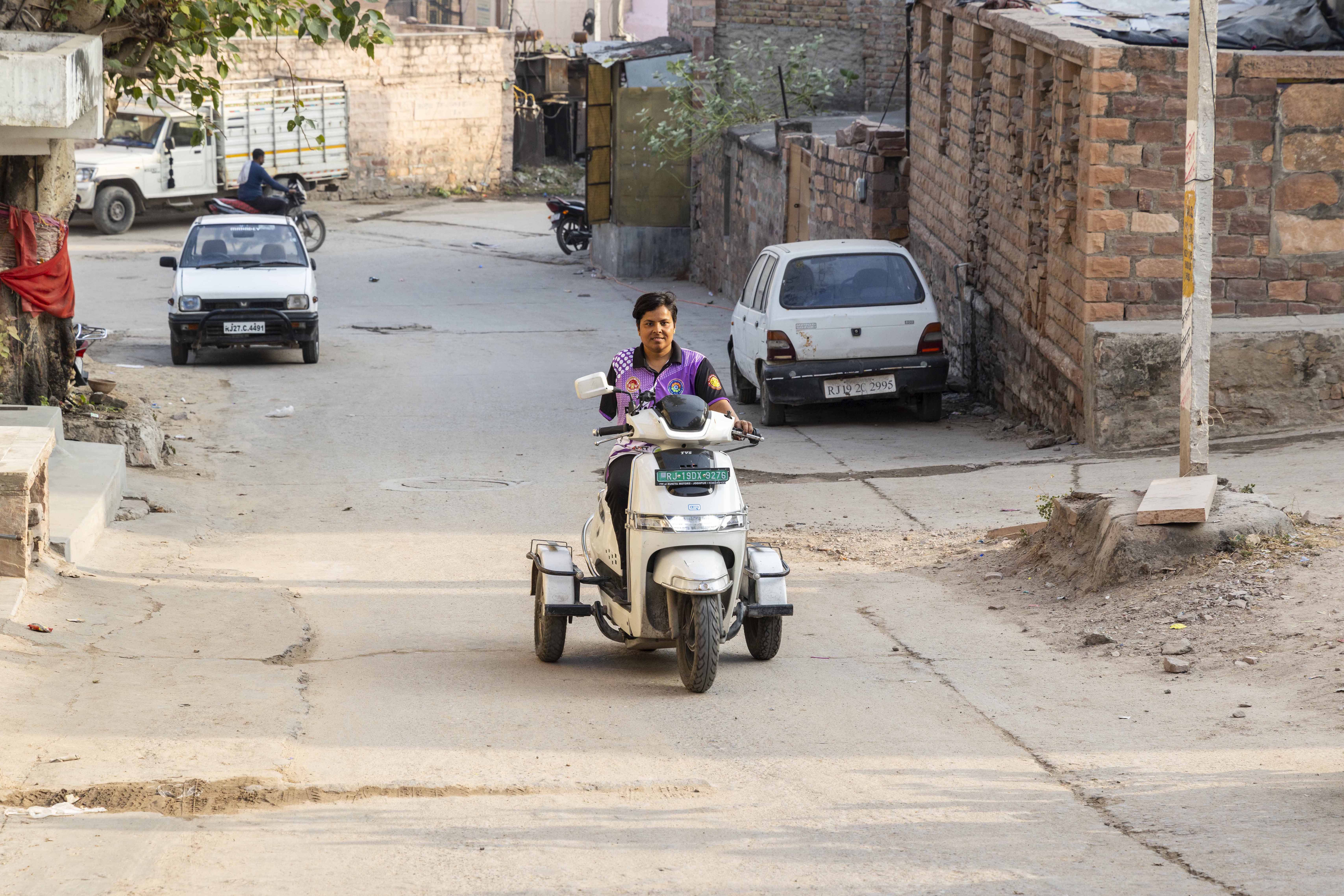

“There is no point in brooding over losses. My biggest supporter is my father”
It was 1996, the morning of Sangeeta Vishnoi’s maternal uncle’s wedding in Kosana, a village 80 km from Jodhpur where she lived with her parents Ramsukh and Daaku Devi. Rain pattered on the rooftop, and six-year-old Sangeeta, fuelled by curiosity, insisted on going to the terrace even when her cousins refused. Up there, she saw a wire hanging loosely. She reached for it, imagining a swing.
The moment she touched the high‑tension wire, her world went white.
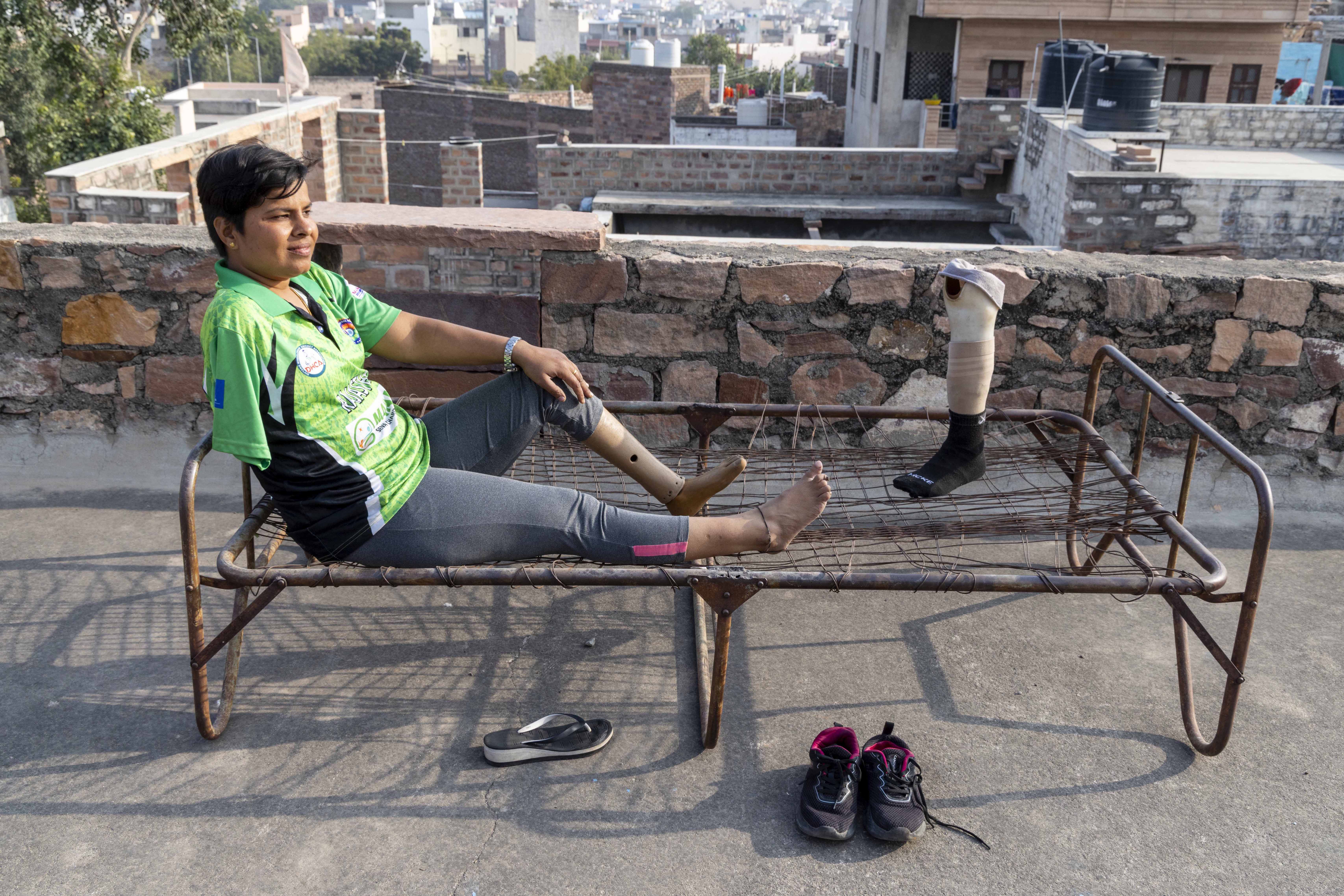
Her grandfather found her lying unconscious on the wet ground. The current had shot through her right hand and exited through her left leg, leaving behind burns – and a life that would never be the same. Her family rushed her to the hospital, where doctors performed two surgeries on her leg and four on her hand, but ultimately they had no choice but to amputate her right arm up to her shoulder and her left leg up to her knee. People whispered, they muttered among themselves, and some openly spoke: “It would have been better if she hadn’t survived.” But Ramsukh silenced them all. He said, “She is my kaleja ka tukda (piece of my heart). I will take care of her all my life.”
Treatment went on for a year and she began walking with crutches. Later she was fitted with a prosthetic ‘blade’ that transformed her mobility. Sangeeta completed fourth standard in a mainstream school and in 2000, Ramsukh enrolled her in Sucheta Kriplani Shiksha Niketan, a special school with a hostel. At first she was terrified of being left behind, but she gradually got used to the idea of being away from the family. The hostel became home, and her parents visited her every week. By 16 she had learned to take care of herself.
In school, international tournaments were meant only for boys. But sports coach Amar Singh saw a live spark in young Sangeeta. At age 10 she stood on an international stage and won the Outstanding Award at the London Mini Paralympics. However, she couldn’t immediately continue her sporting career for lack of coaching and other facilities, so she returned to academics. She completed her B.A., her M.A. in Sociology, and got a Basic School Teaching Certificate in 2013. That year, encouraged by relatives who knew she could manage daily life independently, she got married. But the marriage soon revealed a darker side: dowry demands, cruelty, and emotional torment. Her parents stood by her and brought her home. In 2019, she finally obtained her divorce.
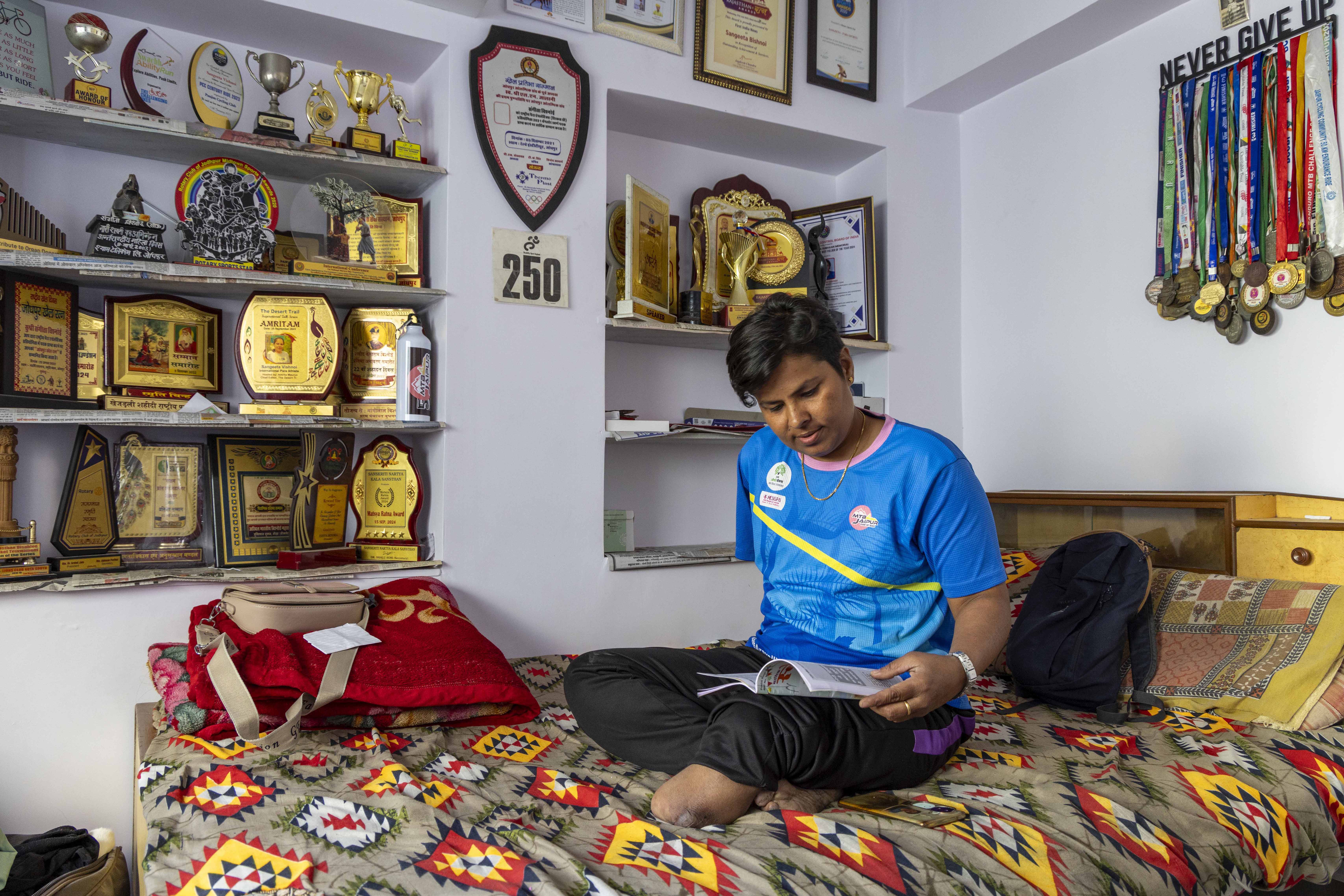
Meanwhile, she had returned to sports with renewed determination in 2016. Cycling in the desert, running, swimming, discus throw, cricket – she threw herself into athletics, “not to prove anything to the world, but to feel alive”. She became a regular marathon runner, and to this day whenever there is a marathon held in Rajasthan she endeavours to participate. Her showcases are overflowing with plaques and trophies; medals of every colour hang from the wall. She won Silver in 100m & 200m at the 18th National Para‑Athletics; Gold in 100m, 200m, and discus at the 7th and 8th State Para‑Athletics; Gold in 200m and 400m, and bronze in shot put at the 9th State Para‑Athletics. In 2023, she took part in the Purple Run in Goa.
In 2021, Sangeeta secured a job as Senior Assistant to the District Collector in the Technical Education Department. Every day she commutes around 9 km to work, riding a specially‑modified three‑tyre scooty. She lives with her elder brother Suresh. Her family remains her circle of strength. Her father still runs a tea shop and continues to be her unwavering support.
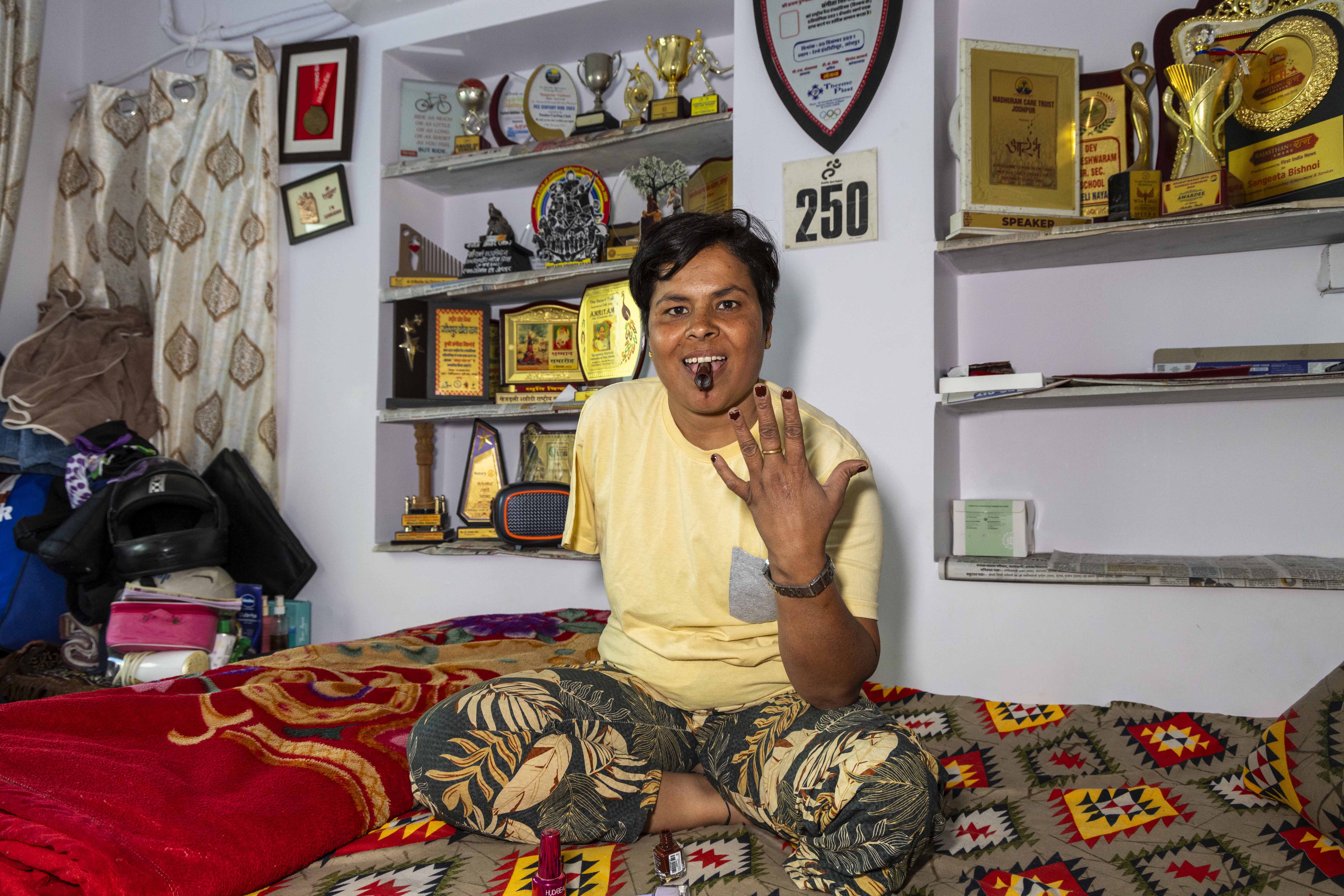
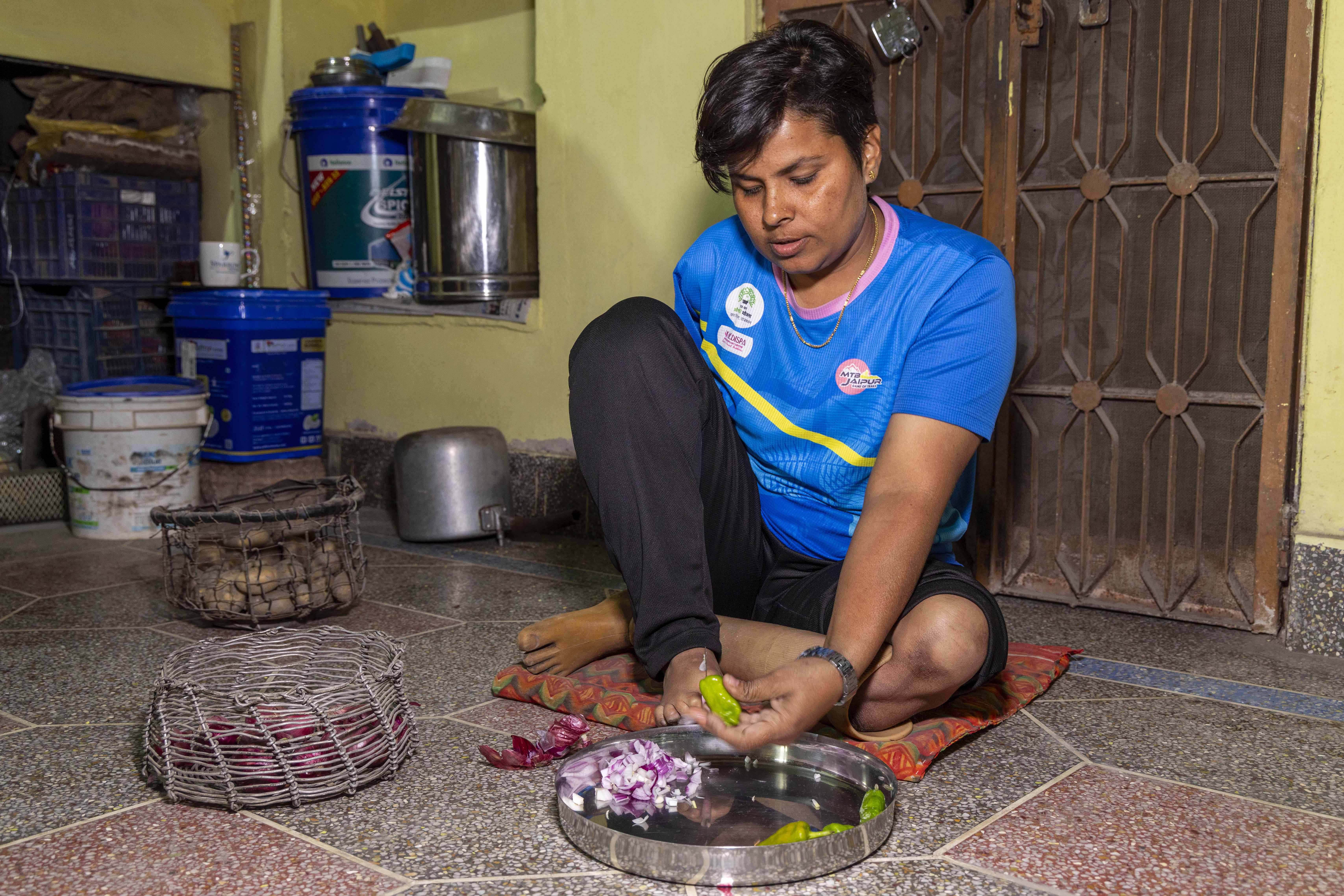
Sangeeta cooks with ease, rolling chapatis, chopping vegetables, wearing a watch single‑handedly, making everyday tasks look effortless. Her favourite foods are bajre ki roti, bitter gourd, dal‑baati, sangri ki sabzi. She says, “There is no point in brooding. When you see people who have even less than you, you realise how blessed you are.”