
priyanka
priyanka agarwal , karnataka

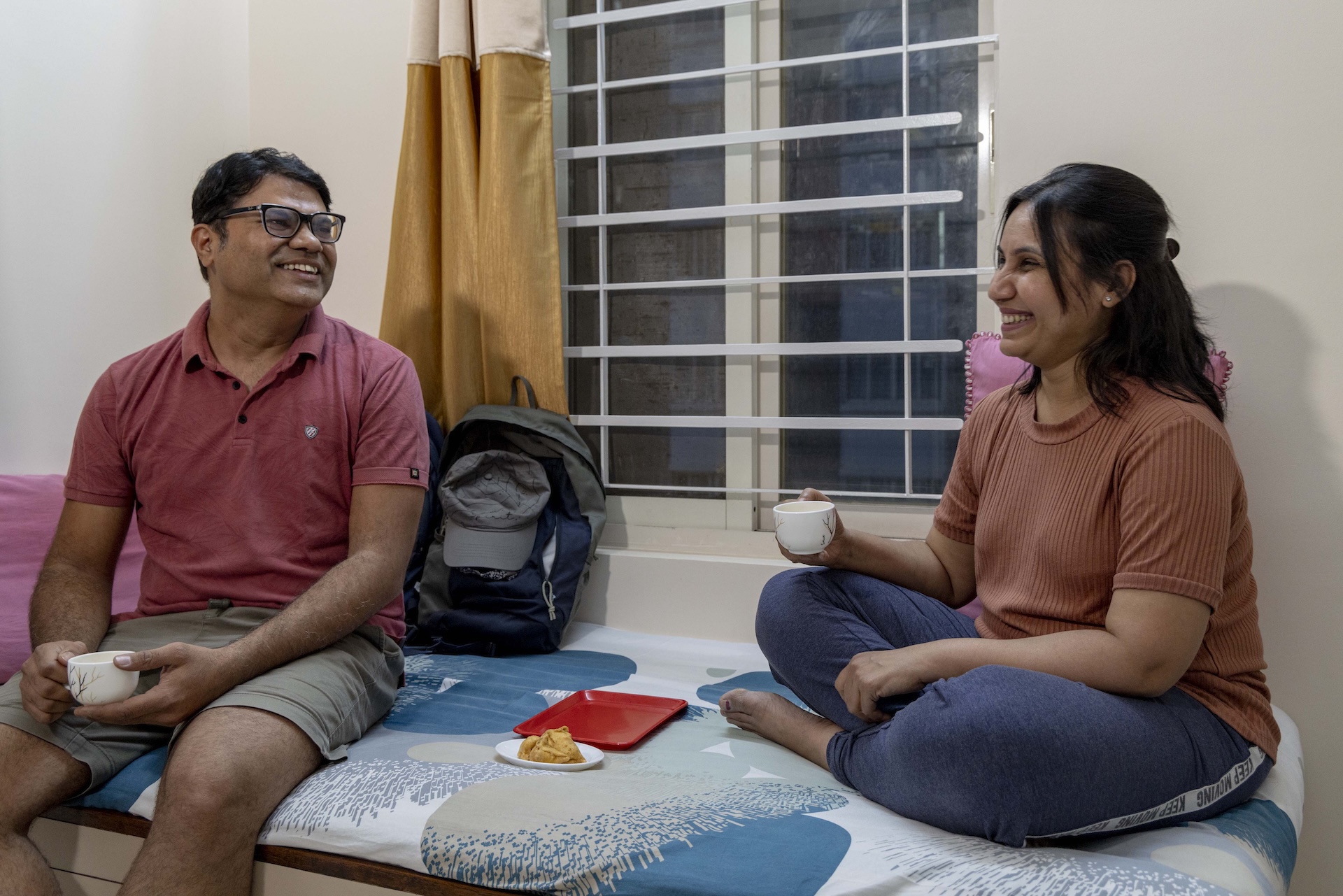

“Instead of fearing the future, accept today, and do the things that make you happy”
Priyanka Agarwal (42) from Bengaluru may have become the second Indian woman with blindness and first from Karnataka to reach Mount Everest base camp but the uphill climb that symbolises her life has been no less of a Himalayan feat.
Priyanka’s businessman father moved from Kolkata, where she was born, to Ernakulam in Kerala, where she completed most of her studies. Her first stumbling block appeared unobtrusively at the age of 10 when she found she could not read the blackboard from the last bench in class. The doctor prescribed glasses but didn’t reveal to the family that she had Retinitis Pigmentosa (RP), an incurable genetic condition where the vision progressively deteriorates. When she was in tenth standard, during the mid-term exams she could barely make out the questions in the Hindi paper. Somehow she passed the Grade 10 final board exams.
On the next visit to the doctor, in 1999, he revealed she had RP. Since none one else in her family had it – not her parents or her two older sisters or younger brother – he said a recessive gene might have caused it. “Until then I could see, would walk, take public transport,” she recalls. “I loved cycling.” Her family hoped that taking vitamin A and eating a lot of carrots would slow down the decline. However, other symptoms gradually crept in: night blindness, colour blindness, tunnel vision. From Grade 12 onwards she had to ask teachers to read aloud the exam questions.
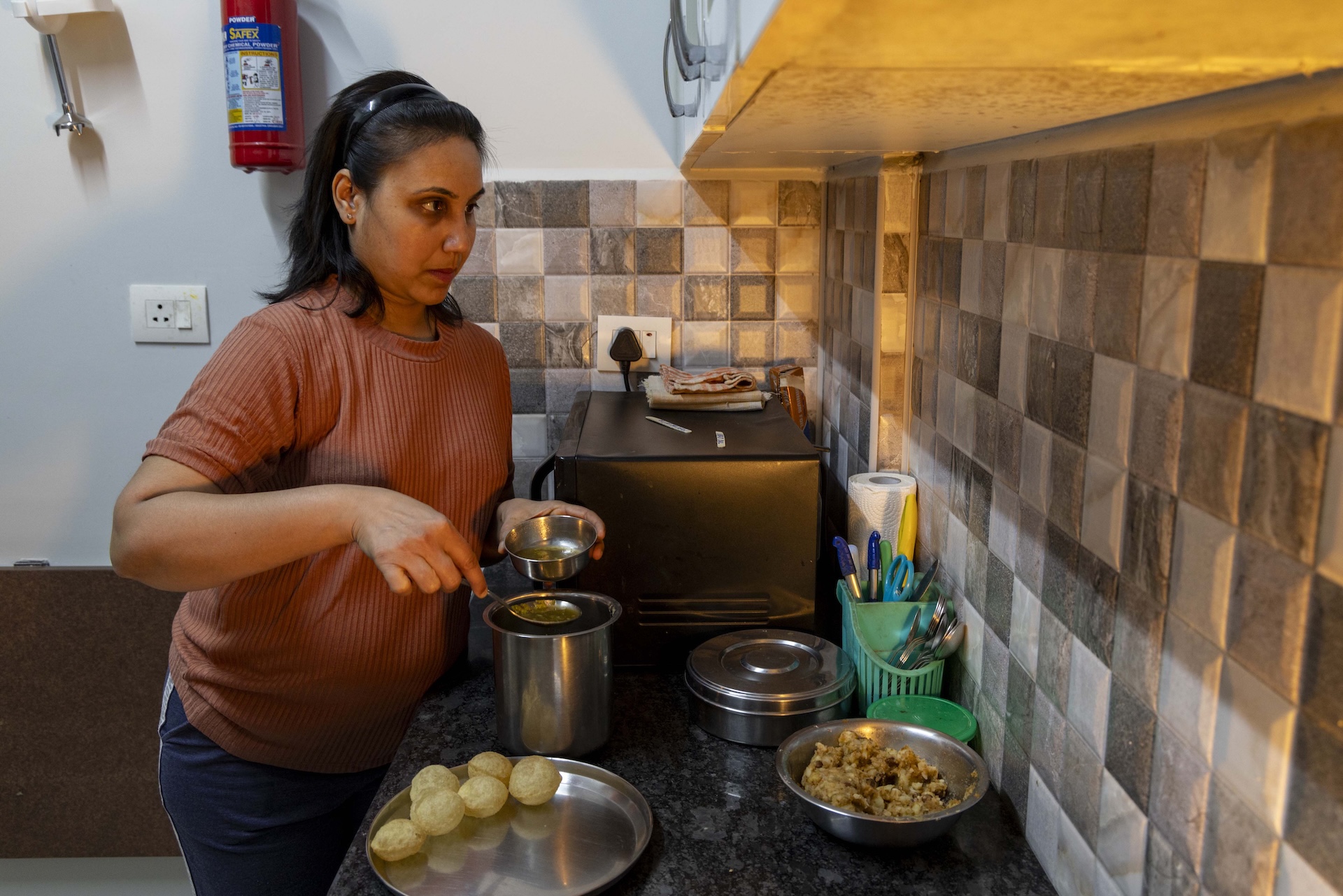
In 2004 she completed B.Com from M.G. University, Kottayam. One of her sisters started working. “This inspired me. Girls don’t work in my conservative Marwari community,” she says. “I too was determined to work.” She took up a series of telemarketing jobs where she received positive feedback for her communication skills and was awarded for her work. Then in 2007 the family moved back to Kolkata because her father’s business wasn’t looking up. She tried hunting for jobs but her call centre experience didn’t suit any of them because they involved field work. She stayed at home for five years during which her mother taught her cooking and household chores.
Meanwhile, in 2009, Priyanka went to Nepal for a cousin’s wedding. She met his fiancée’s visually impaired friend, Surbhi, who showed her the computer screen reader software, JAWS. She was fascinated and asked her brother, who worked for Google in Hyderabad, to find out if there was any organisation in India like the NGO in Nepal that had taught Surabhi JAWS. He came across the National Association for the Blind (NAB) and she joined their three-month computer training course for the visually impaired.
Priyanka started applying for jobs online. There were two on-going recruitment drives. After raising her hopes during the interview rounds, both companies crushed them with the same response: they could not install JAWS on their computer system. She remembers going back utterly disappointed after four rounds of what she thought were successful interviews. “I cried all the way home,” she says. “I asked the universe to give me just one more chance, to give me an equivalent or better job offer within one year.”
Priyanka threw herself into volunteering at NAB, learning, teaching and helping others. She got in touch with Enable India and, after persuading her parents to let her go to Bangalore, underwent three months of training. Job placements followed the training and she finally got a well-paying job at IBM in 2012, exactly a year after her two rejections!
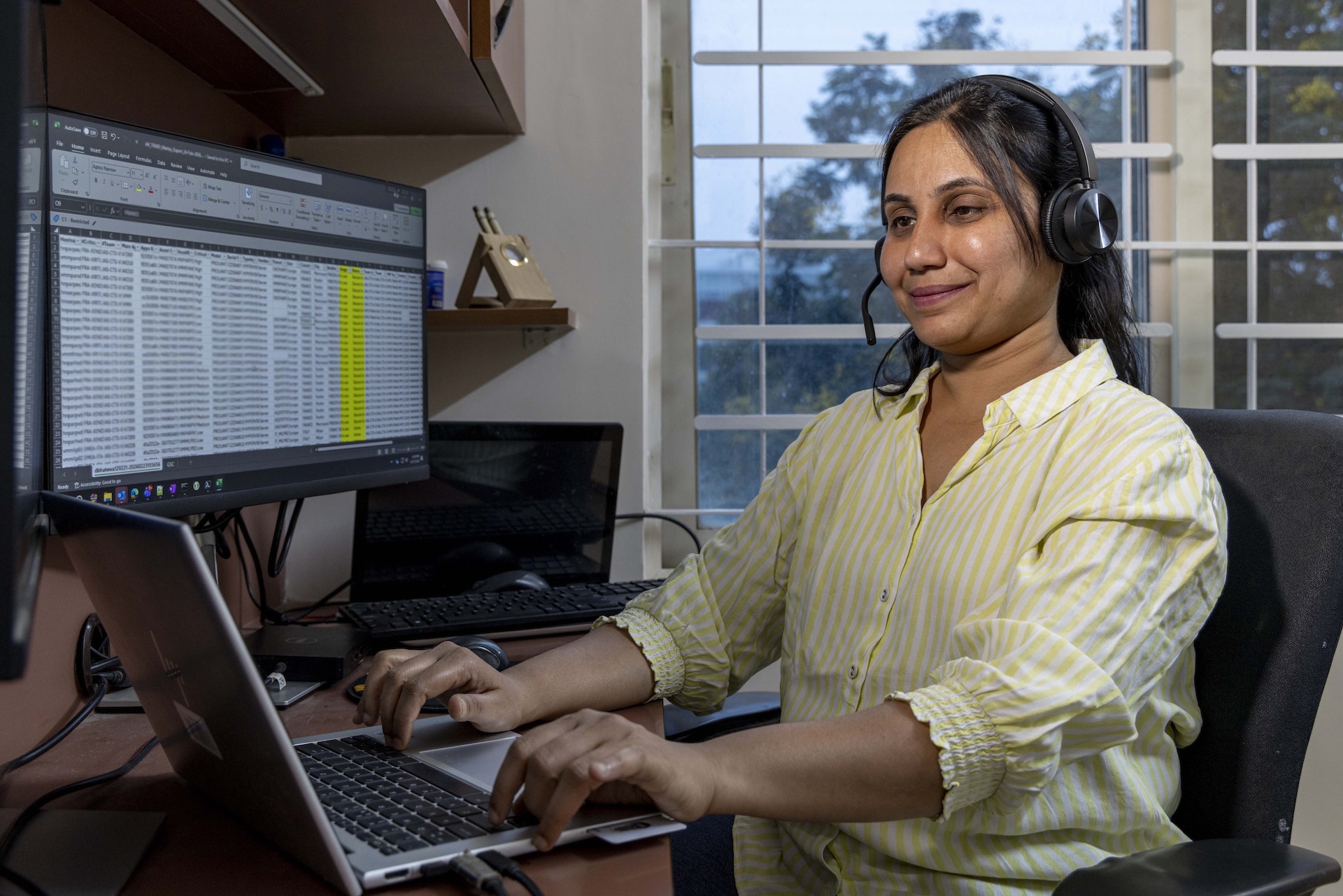
At IBM her career soared. Besides doing well at work, she was an enthusiastic volunteer, orchestrating many events as team leader of the core group for disability which was twice awarded the best group across IBM. In 2018 she decided to buy a house. She made the initial deposit, took a loan, and got the house designed to suit her needs. Her family was stunned when they realised she had done it all on her own. In August 2019 she joined Dell where she currently works as a Product Manager.
The house she bought acquired another occupant because love found its way in! Back in IBM she had organised a Blind Walkathon and Dimpesh Bhatewara (38) had come to pick up T-shirts for the event. They got acquainted, lost touch during Covid when he went to his hometown, reconnected in 2021, and realised they loved each other. After his divorce and after struggling against massive resistance from his parents, they finally signed on the dotted line in court on 4 December 2023.
An important part of Priyanka’s volunteering endeavours has been her encounter with the India Inclusion Summit (IIS). “I became Priyanka 2.0 after 2015” is how she puts it. That year she attended IIS and was blown away by the disabled speakers at the event. “It changed my perspective on life,” she says. The following year she was invited to be a speaker herself, and in 2025 she was an emcee. One of the speakers was Tinkesh Kaushik, a triple-amputee whose NGO promotes accessible adventurous sports for the disabled. He was organising an inclusive 12-day trek in April 2026 to the Everest base camp. This caught Priyanka’s attention.
The rest, as they say, is history. Standing at the base camp she visualised Mount Everest as the peak she’d seen as a child in picture books or in the movies, a triangle with the base either brown or grey, and the top half white. She clarifies the climb wasn’t some long-cherished ambition; she has no list of ‘feats’ she plans to achieve. “These things come up before me and a voice tells me, you can do this” she explains her approach, echoing the famous words of George Mallory who, when asked why he wished to scale Everest, replied, “Because it’s there.”