
pintuben
pintuben meda , gujarat

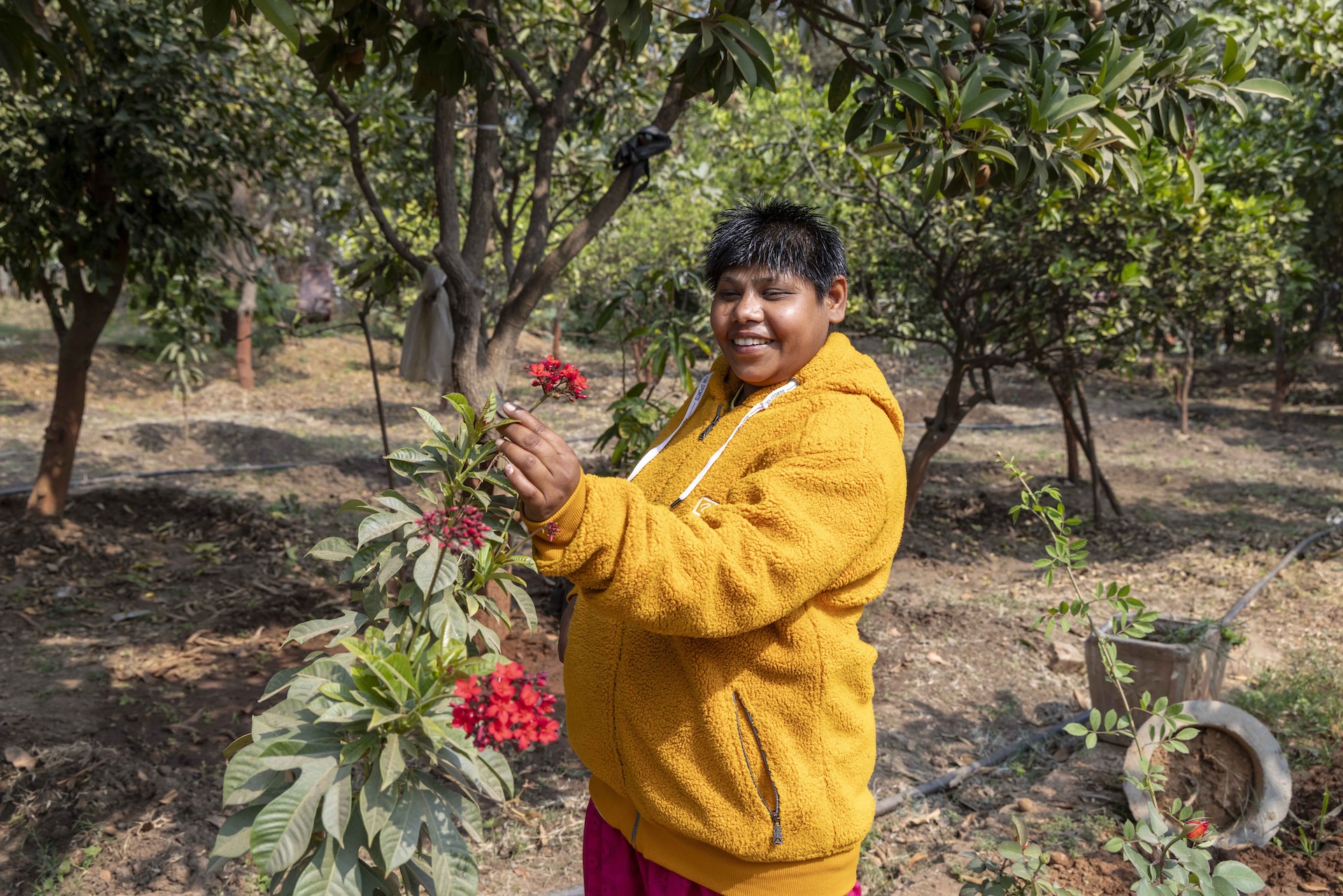
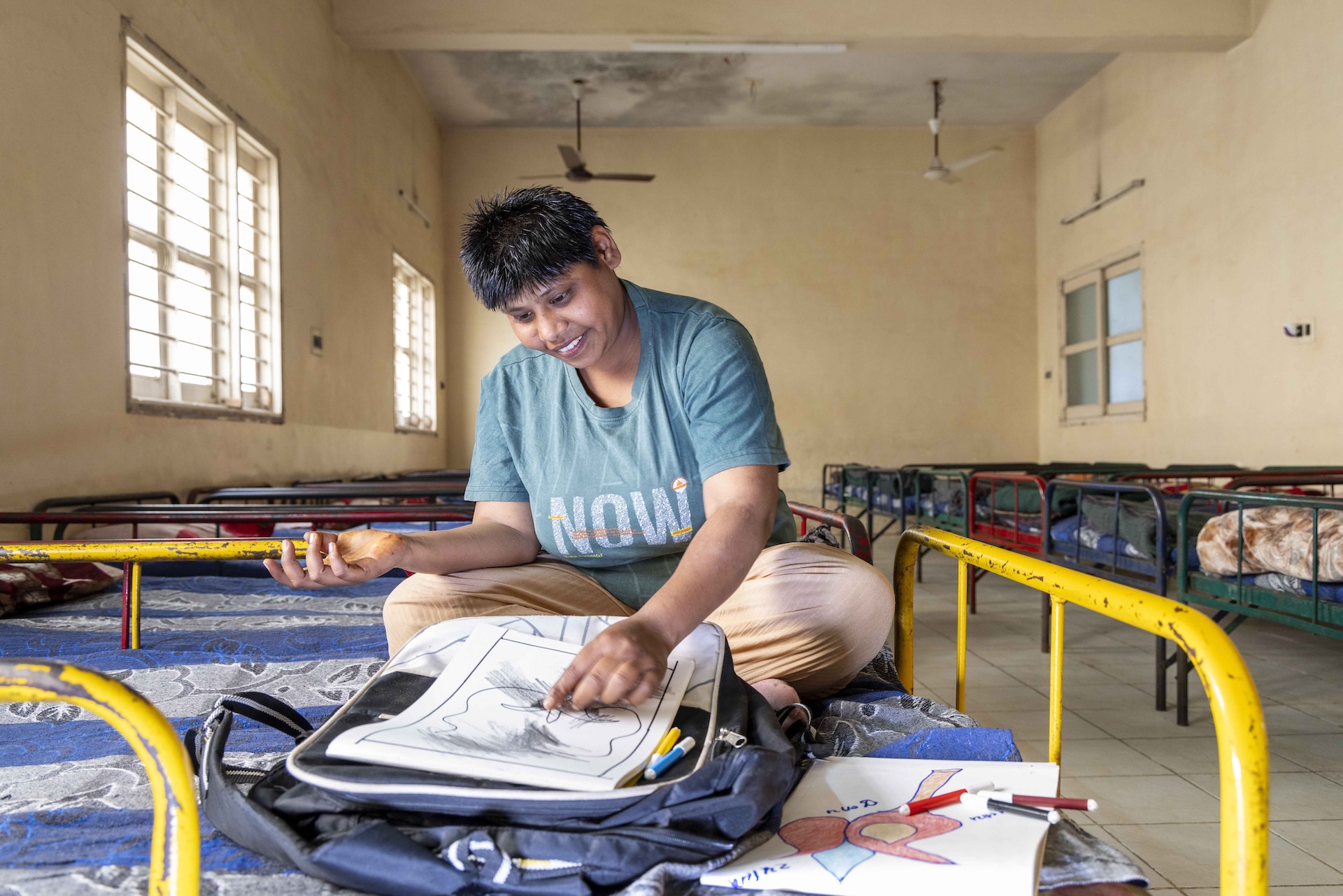
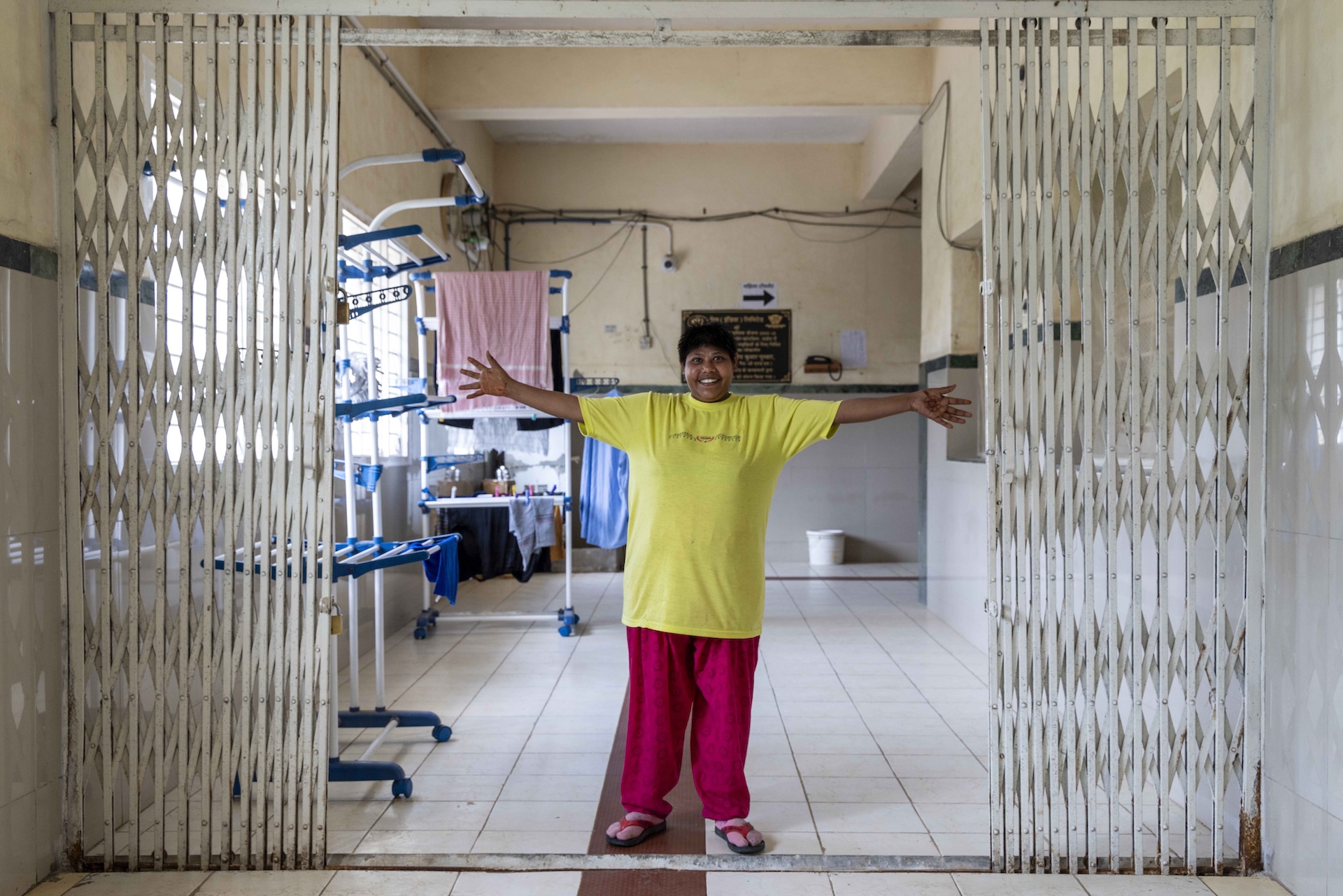
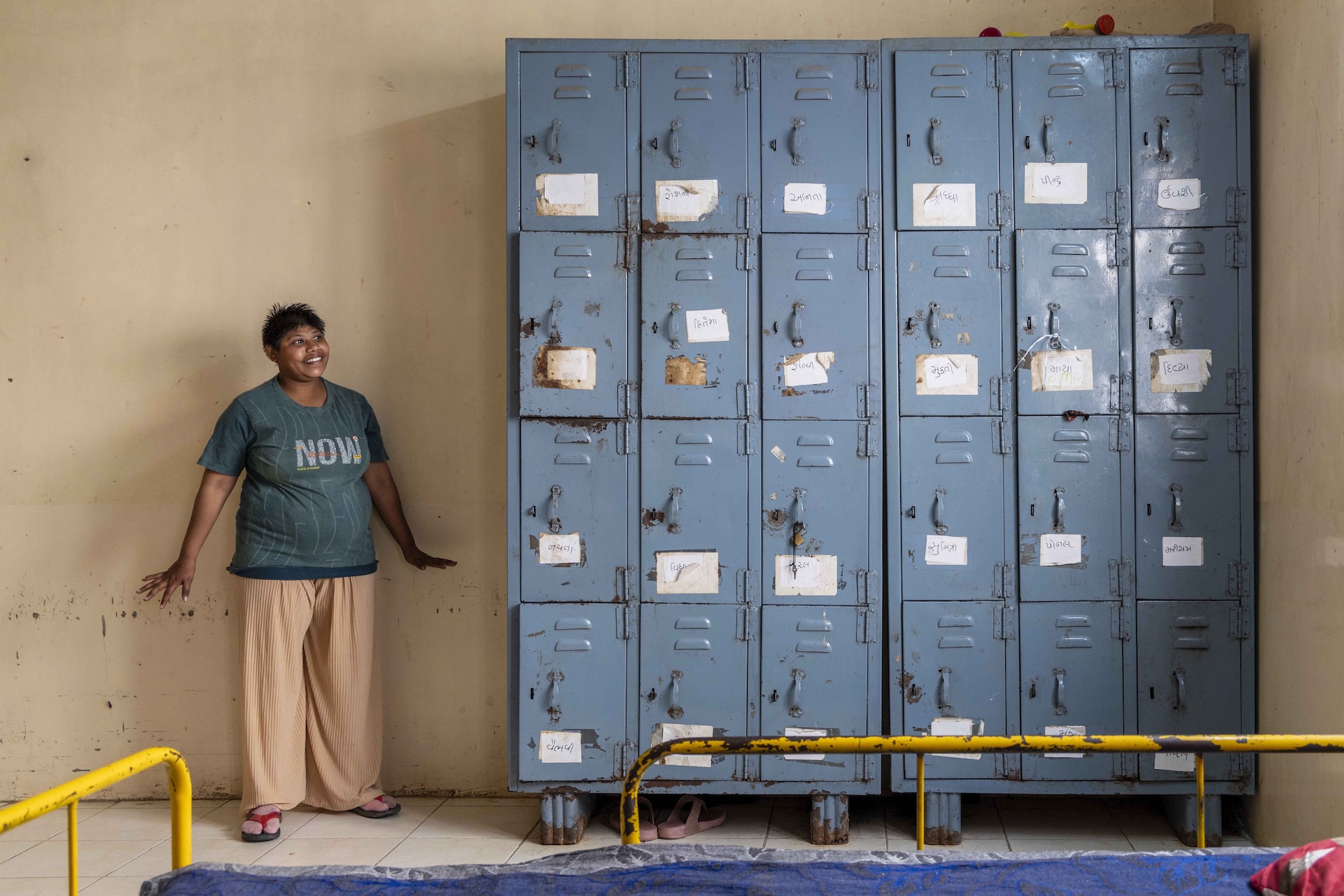
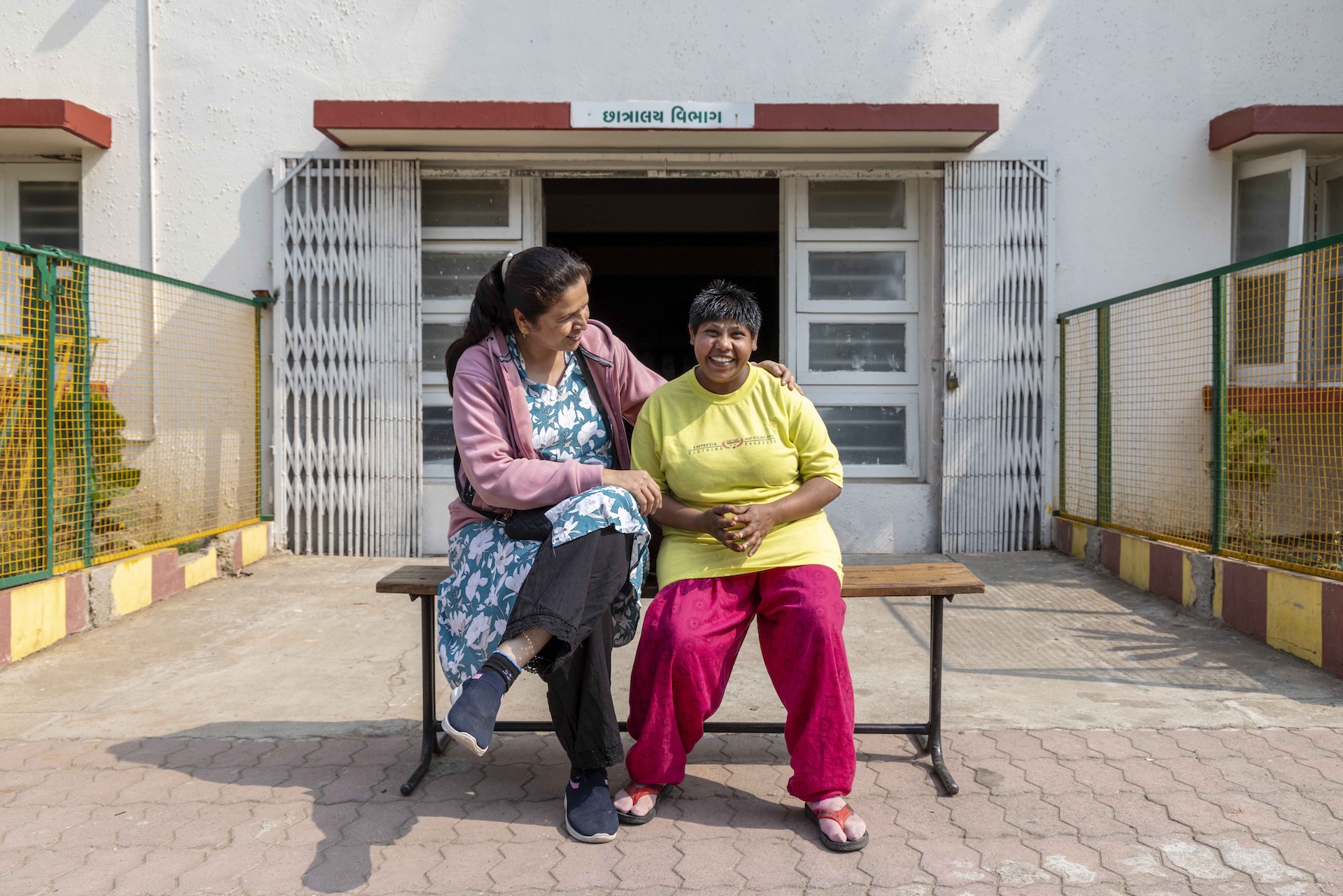

“I enjoy dancing the Garba. I become restless if I don’t have something to do”
Five years ago, while conducting a rural survey of disabled children, staff members of the Blind Welfare Council school in Gujarat came across an unusual family. A daily wage labourer couple had eight children, of whom five had disabilities: one with orthopaedic issues and four with microcephaly (born with a disproportionately small head) which affects brain development.
EGS readers might recall the story of Yusufi Kapadiya who founded the Blind Welfare Council trust to serve persons with (not just Blindness but) different types of disabilities in the tribal and deprived regions of Dahod and Panchmahal districts. Among the trust’s manifold initiatives are education, rehabilitation, livelihood training towards employment, supporting students in sports activities, and providing assistive devices.
The school staff were checking houses for disabled children whom they could enrol; the residential school houses over 100 children, with a range of disabilities, who receive free board and lodging, education and training. When they reached the Chatrabhai household they found three girls and a boy with microcephaly (an inherited genetic anomaly is one of its possible causes). They counselled the parents who agreed to the enrolment process. But first, the paperwork had to be in order, and only Pintuben Meda had an Aadhar card and the necessary certificates.
By this stroke of good fortune, Pintuben, now 18-plus, has been blossoming in the Blind Welfare Council school. The school principal Radhika Singh recalls, “Initially we also tried to bring in Pintu’s brother, who has severe microcephaly, but we couldn’t cope for more than a few days.” Even the trained staff couldn’t handle his hyperactivity and violent behaviour towards his attendants. Pintu’s a different story, though.
Radhika, who is also the coordinator of a two-year Diploma in Teacher Training course, describes the objectives of the school, where she has been working since 2002. Education here goes far beyond textbooks; the focus is on life skills: personal hygiene and self-care; basic communication and social interaction; simple vocational and household tasks; creative expression through art, craft, and movement. Children live on campus full-time, returning to their families only during major festivals and summer vacations. For many poor families, this arrangement provides both relief and hope.
Every child is guided according to their abilities, not forced into a rigid system, Radhika explains. From the beginning, it was clear that Pintu’s strengths lay outside traditional academics. She struggles with reading, writing, and arithmetic, and her speech is unclear, but she expresses her desires and emotions through actions and movement. One of her most remarkable qualities is her love of dance. “When music plays, she comes alive,” says Radhika. “She can dance for hours, in perfect rhythm, without tiring.” She especially enjoys doing the Garba, the traditional folk dance of Gujarat. Her connection to music is instinctive and powerful; though she cannot pronounce the lyrics she hums along to folk songs, especially those sung during weddings.
Pintu enjoys colouring pictures and doing simple craftwork. She eagerly participates in household tasks like drying and folding clothes, and cleaning, and helps care for younger children too. “If she is not given work, she becomes restless,” says Radhika. “She likes to be engaged all the time.” She loves dressing up in colourful clothes, applying henna, wearing bangles, and being appreciated and noticed for her appearance.
Radhika’s journey into this space was not immediate or easy. When she was first approached by the director of the Council she hesitated. The idea of working in a rural area did not appeal to her at the time, and even her parents were reluctant to let her go. But the director encouraged her to “visit once just to see”. That one visit changed everything, she says. She found herself drawn to the calm, simplicity, and purpose of the place. For the last 24 years she has been helping build not just an institution, but a nurturing home for children who need specialised care and attention – children like Pintuben Meda.