
muhammed
muhammed anas , andaman and nicobar



“Change makes me uncomfortable but I am getting better at learning new habits”
Working in and around the medical field and staying next to a government hospital is an advantage for parents of a child with multiple disabilities. Perhaps Shabnam Bibi (34) and Abdul Kadir (37) from Aberdeen in the Andamans are fortunate in this respect.
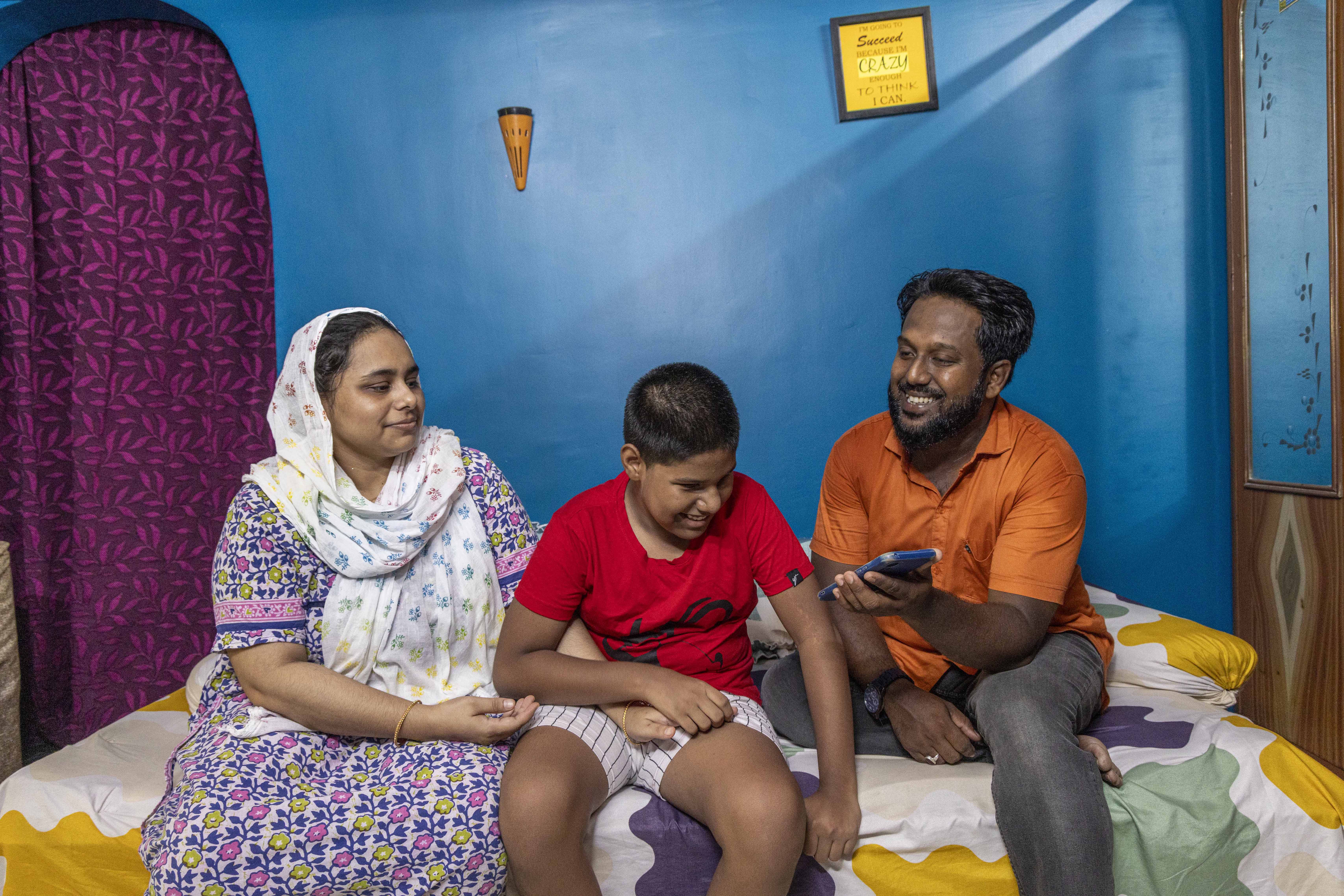
Shabnam works as an Auxiliary Nurse Midwife at a health centre in Port Blair. Abdul is an ambulance driver. They take turns to care for their son Muhammed Anas (11) who is Blind and mildly autistic. Shabnam goes to work at around 8.30 am and returns before 4.30 pm. During the day Abdul takes charge of Anas and then he leaves for duty by 6 p.m.
Shabnam completed her 12th standard through IGNOU in 2010. She appeared for the Staff Selection Commission Multi-Tasking Staff exam which landed her a government job in January 2014, a year after she got married. At around the same time she conceived Anas. “To reach my workplace I had to take the boat and then travel by jeep or bus – a rough ride on an uneven road,” she says. “I think that is why my water broke and Anas was born prematurely.”
When Anas was born on 28 May 2014 as a foetus of barely five months, doctors were surprised to find him alive. He weighed just 900 grams. Shabnam continued to stay in the hospital for four more months while Anas was in the NICU and had to be given oxygen. By the time she was discharged his weight had improved to 1.3 kg.
At six months the couple took him to get vaccinated, and that is when they discovered his blindness. They became aware that his retina was irreparably damaged only after they took him to Chennai for a check-up. When Anas was a year old and Shabnam had to return to work, the couple were not confident of leaving him in the care of anyone else and decided to share the responsibility between themselves.
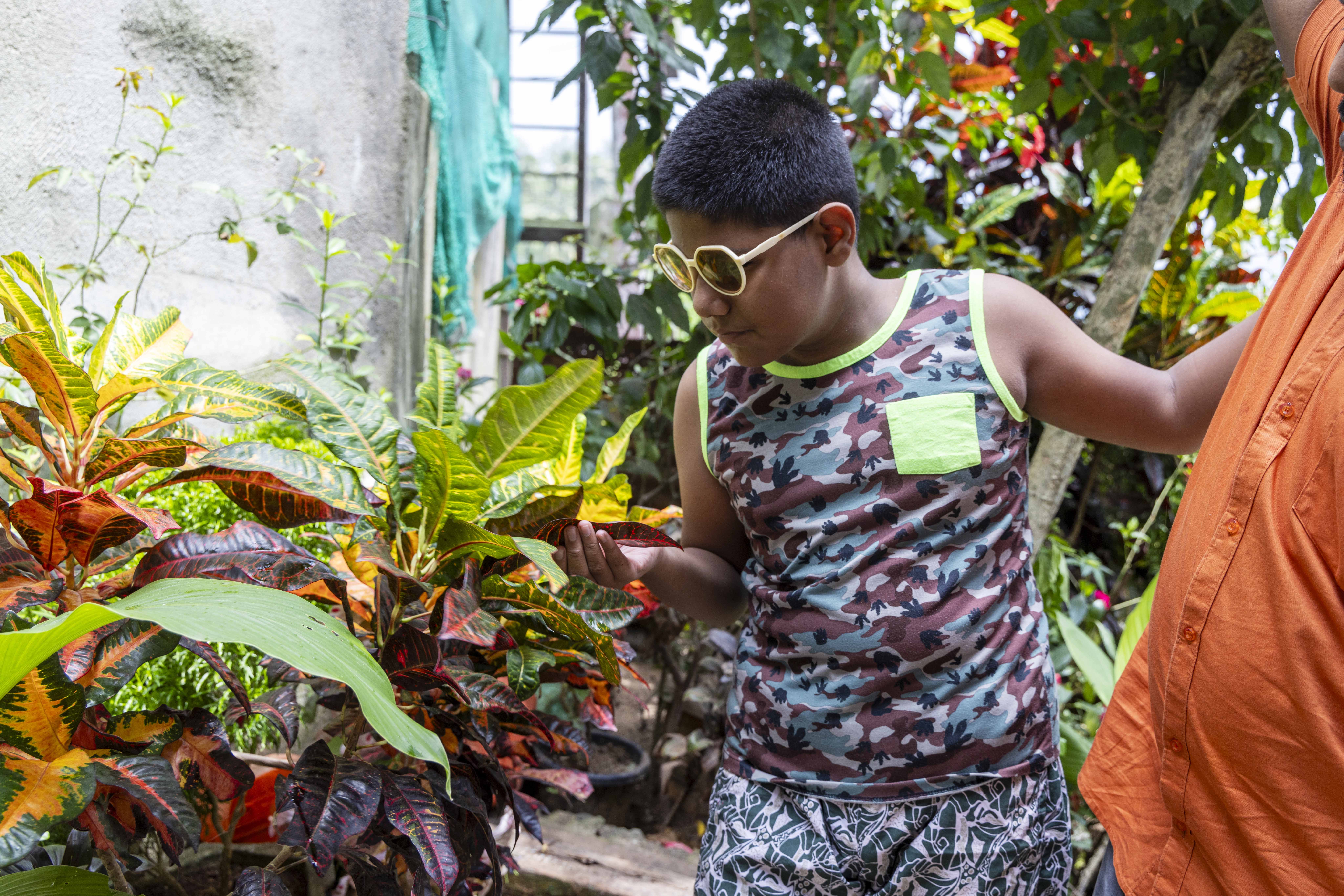
As he grew up, his autistic traits became evident. “The first four to five years were very difficult because he was very stubborn,” says Shabnam. As with many persons with autism, Anas has sensory issues with sound and touch. He recognises people and objects by feeling them and recoils when he has to confront the unfamiliar. “He is now used to our touch, and to some extent, the touch of my parents, and so I am able to leave him and go away for two or three days if needed,” says Shabnam. He cannot stand loud noises. He found the sound an MRI scan makes so unbearable he had to be given anaesthesia!
Repetitive behaviour and aversion to change are other common traits of autism he manifests. “He has problems with speaking. If we ask ‘Anas khana khayega?’ (will Anas eat?), he doesn’t say ‘yes’, he simply repeats the words,” says Shabnam. He used to take several months to learn a new habit. On their medical trips to Chennai, staying in hotel rooms became a problem as he is not comfortable with changed surroundings. In October, for example, they had to take him for a check-up to Vijaya Hospital in Chennai and were to board a flight. They had to train him on what it feels like to buckle up in an aircraft by practising with a car seat belt.
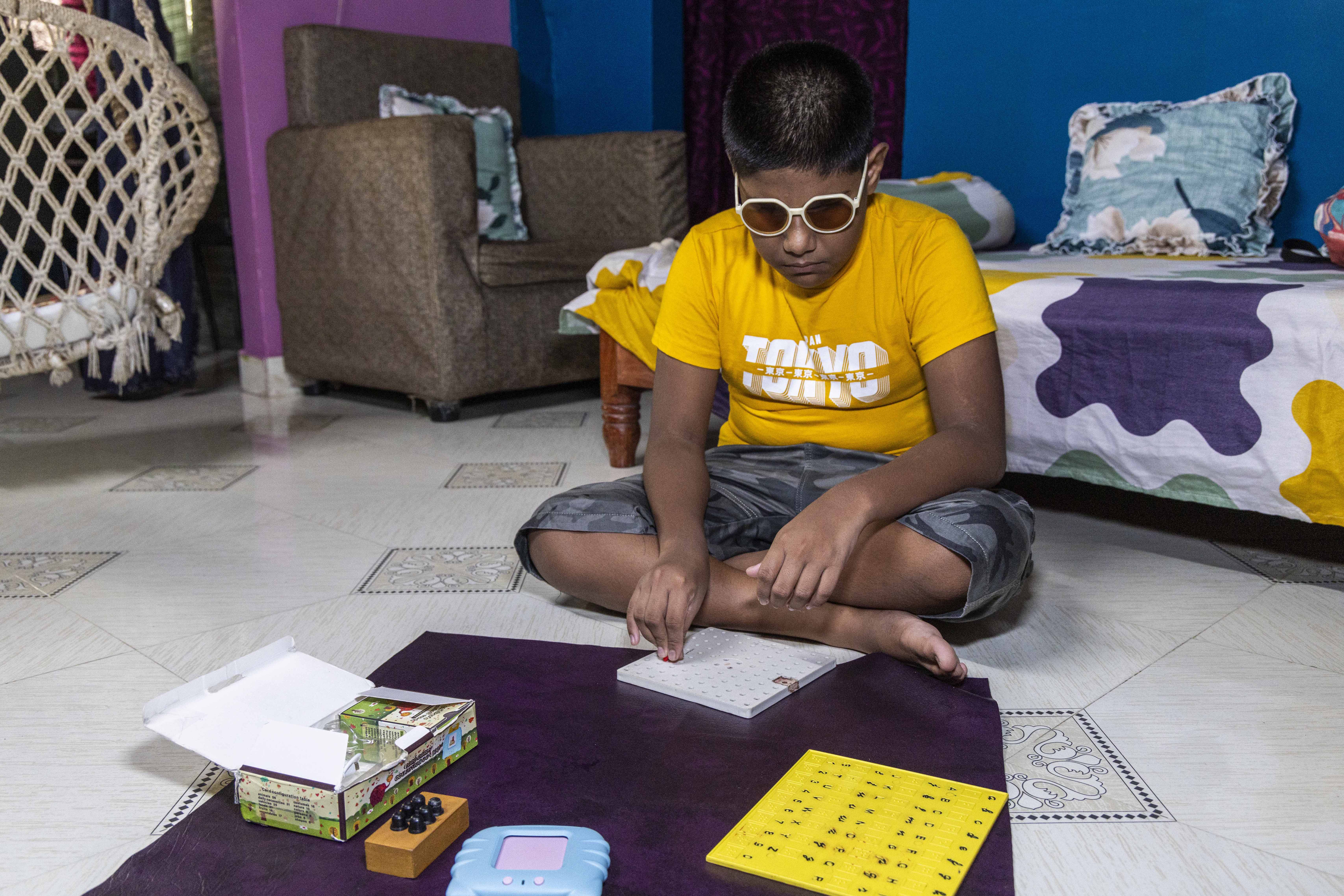
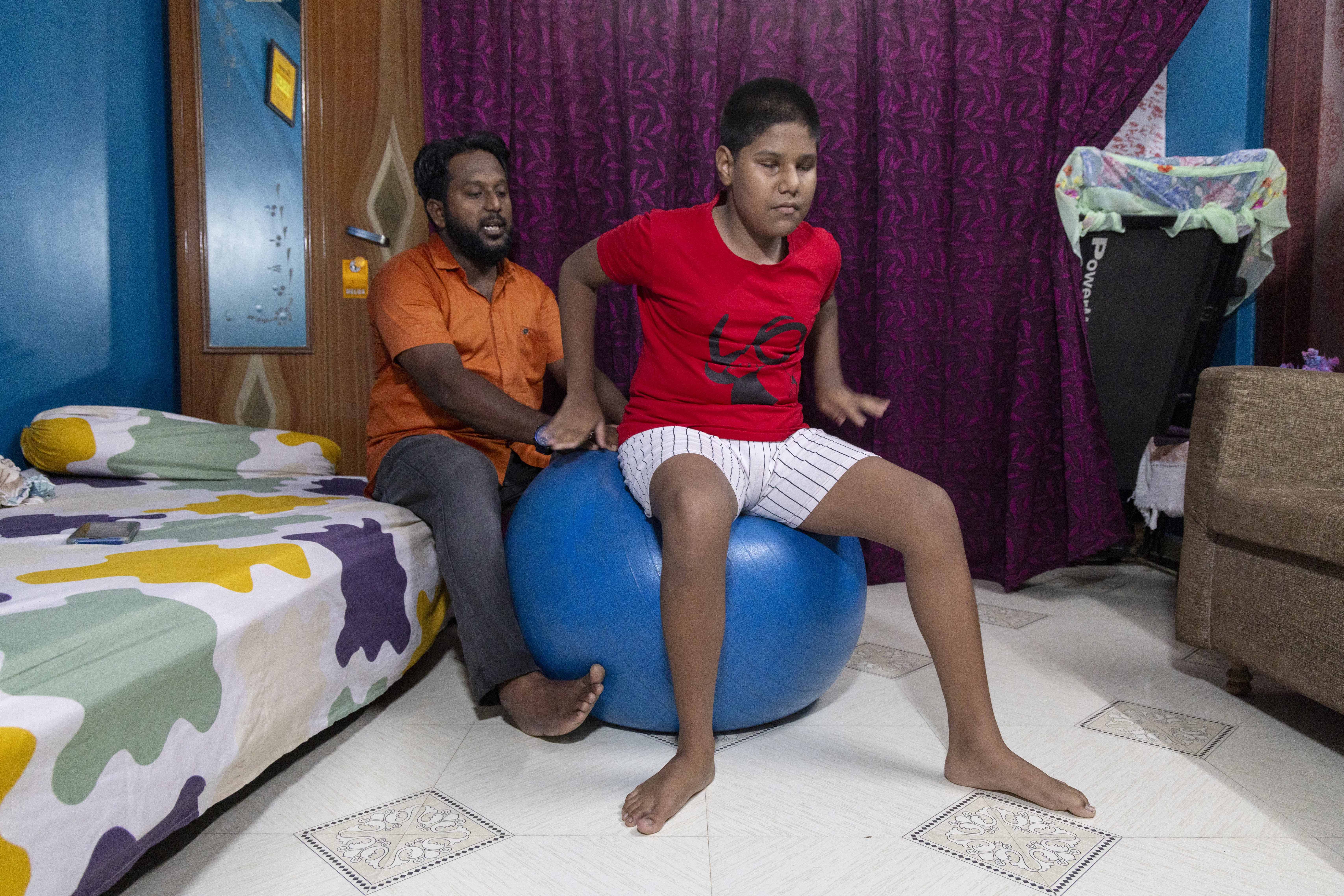
Although Anas is not too keen on studies he does go to a government school, where an elderly teacher knows exactly how to handle him. She has a process by which she gets his hands and feet used to the texture of surfaces. Before the 8.30 a.m. start of school he has a 7 a.m. class in a madrassa where he listens to the moulana and uses Braille to read from the Koran. After school, it’s therapy time: ‘Sajid-sir’ gives him behavioural therapy, occupational therapy and speech therapy. Previously, during speech therapy, he refused to wear headphones but after two-and-a-half months of therapy he can tolerate them for up to 15 minutes. On one day a week he goes to the Composite Regional Centre in Brookshabad.
These support systems have improved his behaviour. He is able to withstand noisy weddings, and takes two to three months instead of six to learn a new habit. He is gradually getting toilet trained too. According to his mother he is taking “medicines to calm his brain”. Shabnam says, “He wants something to eat every two to three hours,” and adds jokingly, “I know 45 kg weight is rather heavy but eating makes him happy.” His favourites are aloo paratha or puri for breakfast, chicken biryani and fish biryani.
Anas listens to songs and likes playing with his cousins at home but his parents are trying to introduce social interaction in his life. Gradually he has started mingling with other kids. He is bound to make gradual progress in all other spheres, too, with continuing therapeutic and medical assistance, and the steadfast support of both his parents.