
lamiya
lamiya salim , kerala

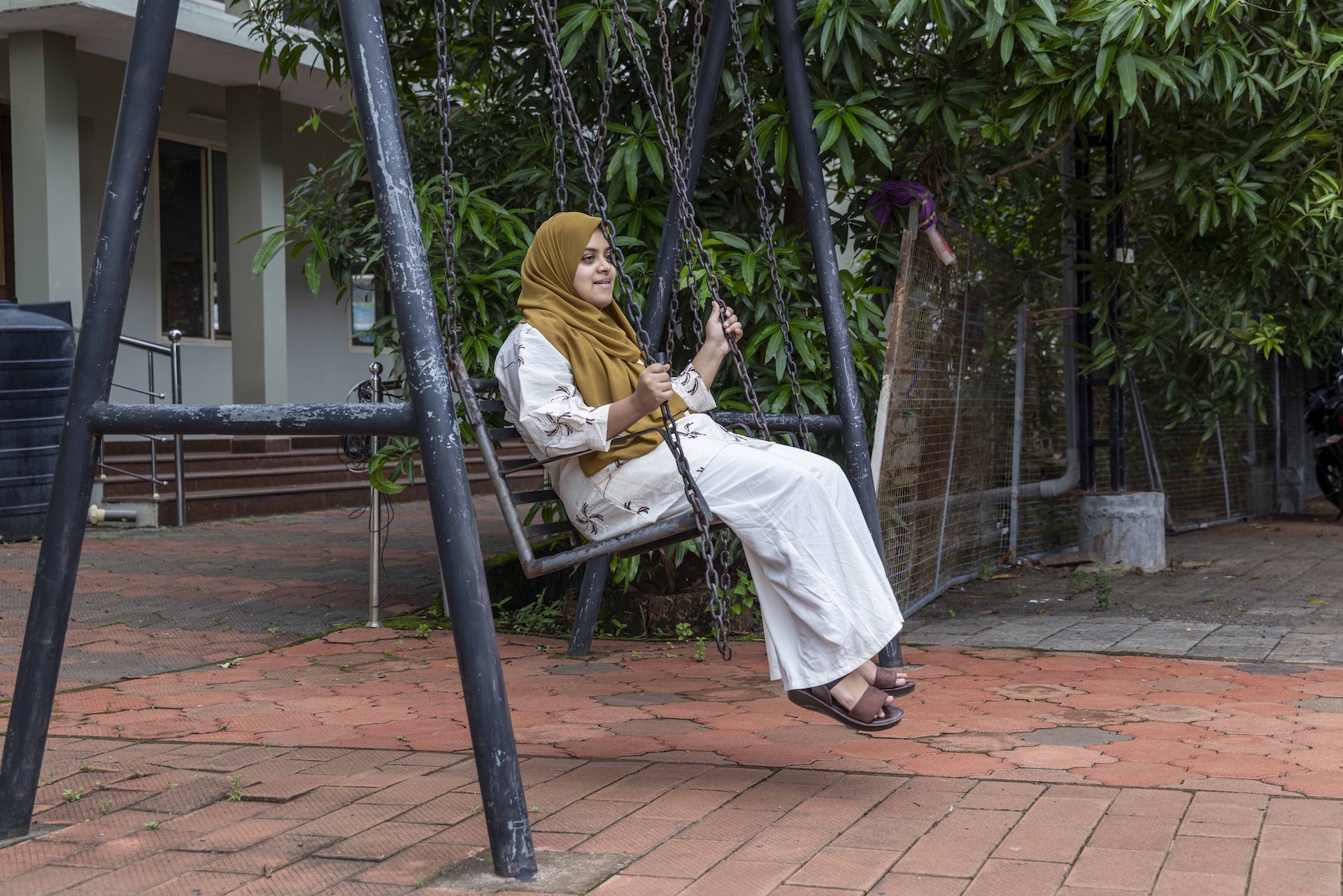

“I am keen on graphic design and I enjoy travel and music. I hope I get a government job”
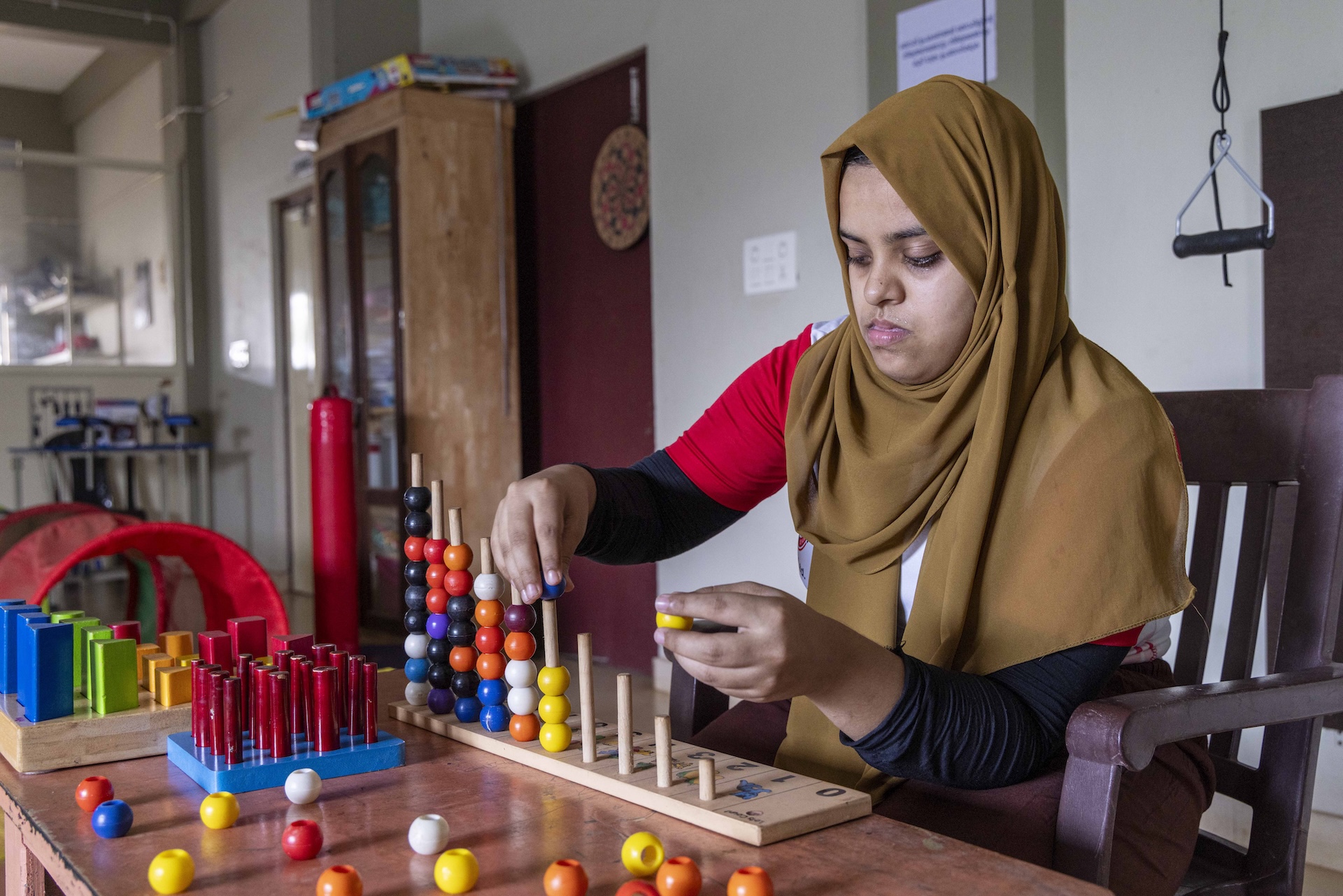
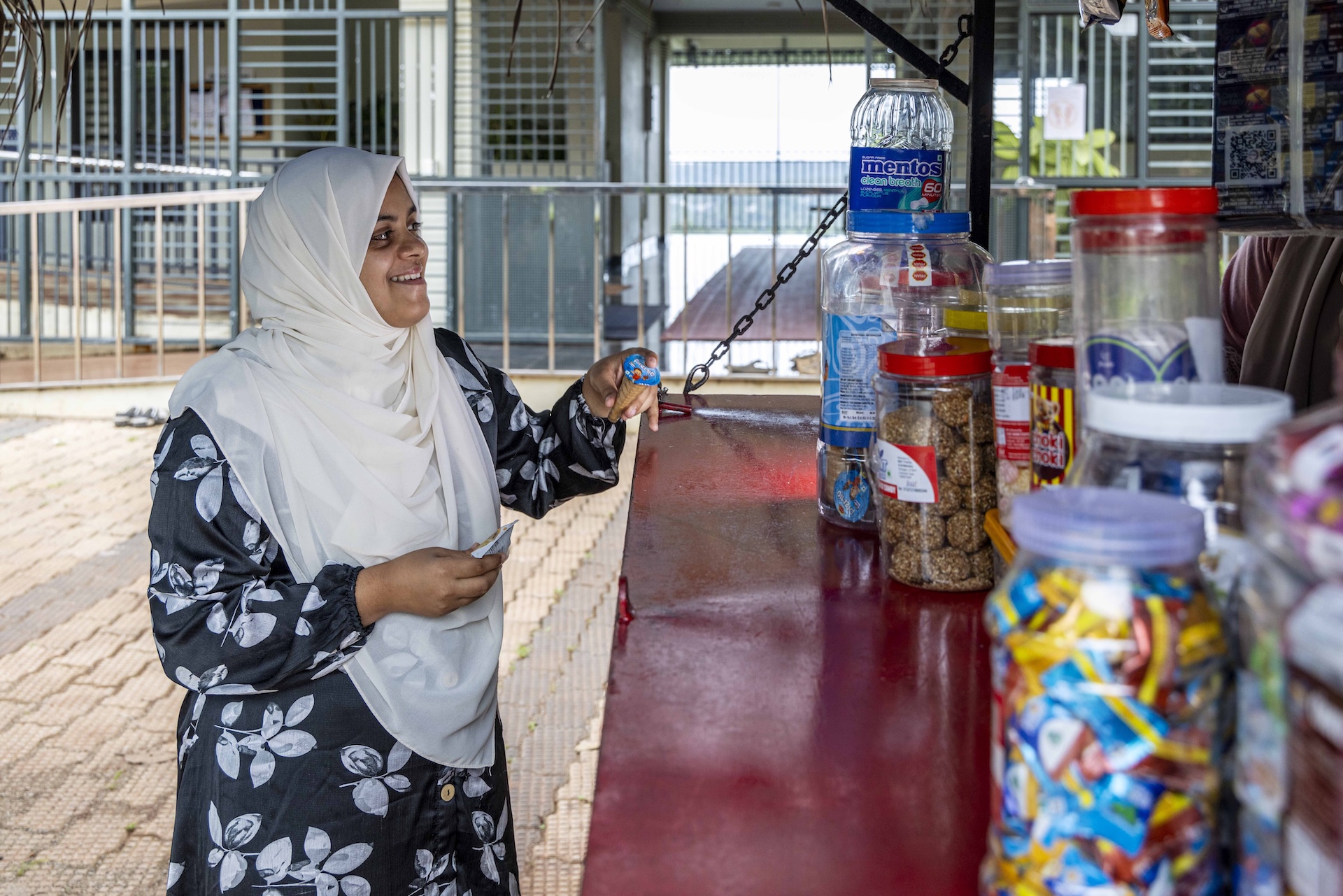
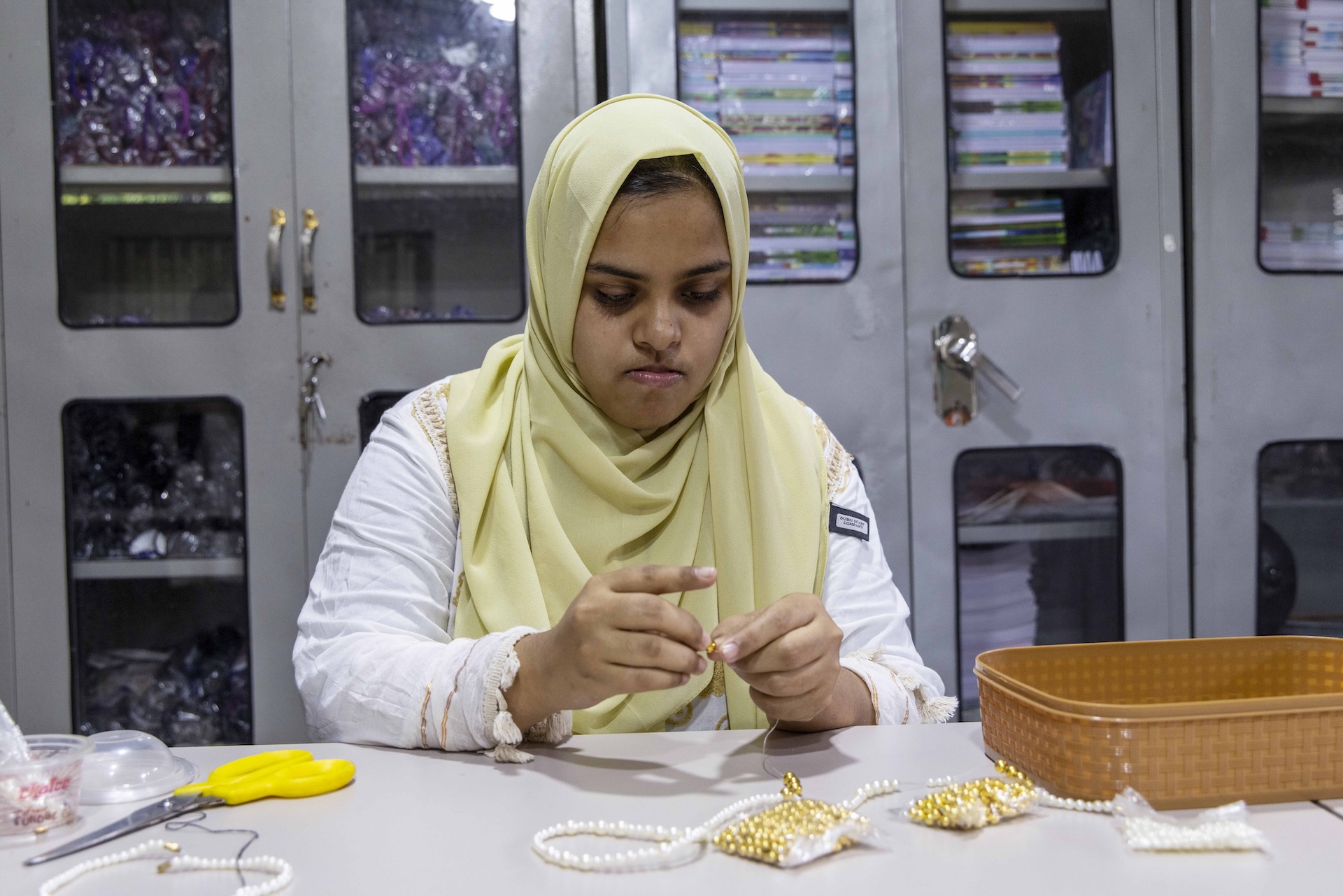
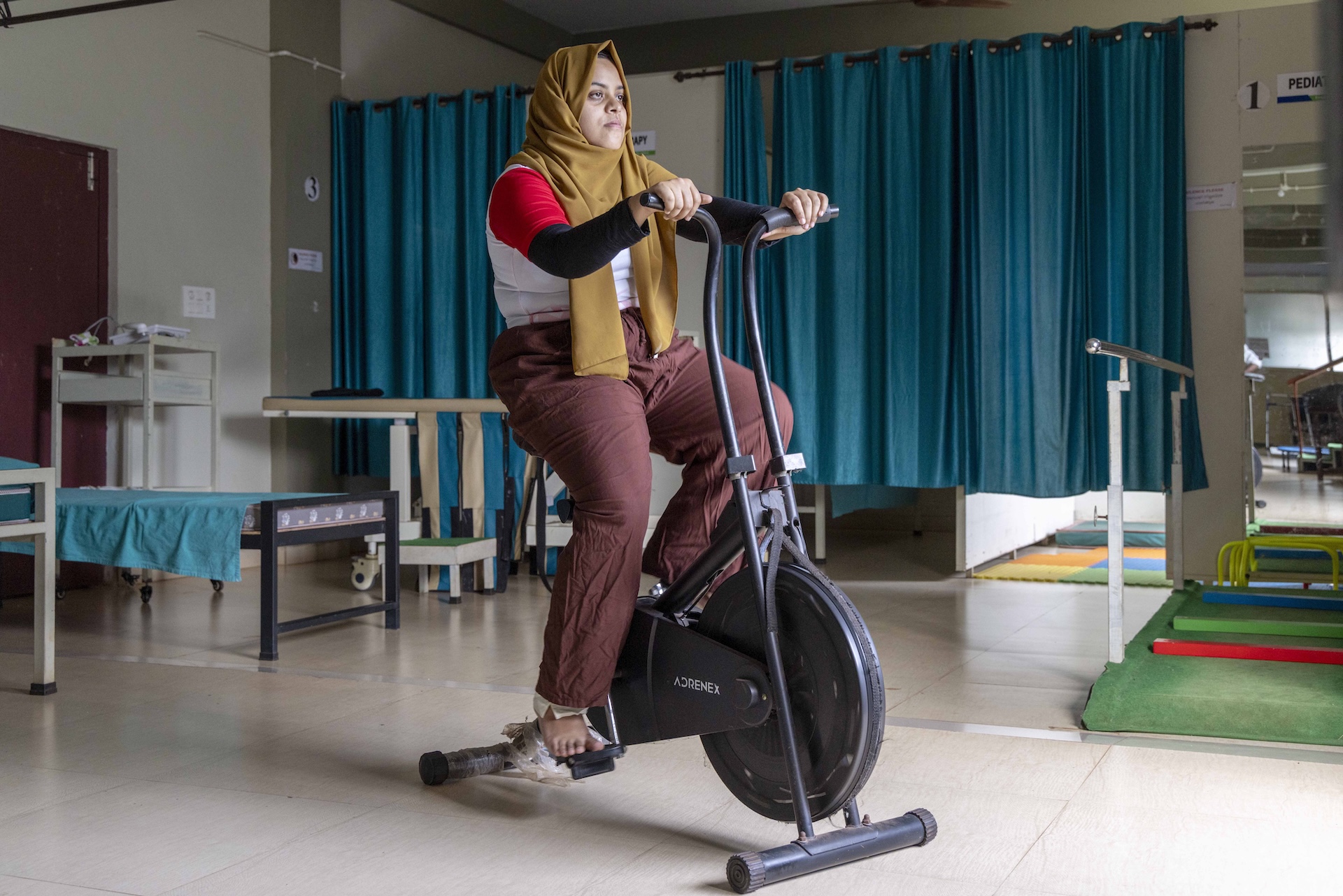
Lamiya Salim (24) throws herself wholeheartedly into every skill she learns at the Ability Foundation in Pulikkal in Kerala’s Malappuram district. For the past three years she has been continuing her education and vocational training at the centre. Moving on from a basic skill such as paper bag making, she has become proficient in stitching and fashion designing. Graphic design is her favourite. Her childhood fancy of becoming a doctor has given way to a serious pursuit of a government job. She is doing an office automation course offered by C-DIT.
Make no mistake, Lamiya, who has a mild intellectual disability, is one disciplined, determined woman! She was born in Riyadh, Saudi Arabia, and grew up in Kannur, Kerala. When she was three-and-a-half years old, her parents Salim and Subeda observed a delay in her speech development. Following medical assessments, she was diagnosed with Mosaic Down syndrome, a milder form of Down syndrome.
“We were determined to give her the best possible care,” Salim recalls. “We took her to Mysore for speech therapy at the All India Institute of Speech and Hearing [in Manasagangothri, Mysuru, Karnataka]. Later we took her to the National Institute of Mental Health and Neurosciences (NIMHANS) in Bengaluru where we were given guidance by the specialists there.” All these early interventions played a key role in improving Lamiya’s communication abilities and building her confidence.
Subeda shares that during early childhood, Lamiya also faced digestive issues, which persisted until she was around five years old. Her health gradually stabilised after she began attending school. She studied in a mainstream CBSE school, learning alongside her peers up to Class 12. During her board examinations in Classes 10, 11, and 12, she was provided with a scribe, which helped her complete her exams with ease. She has always shown enthusiasm for learning and actively participated in school activities.
Living in a residential environment at the Ability centre has helped her grow even more confident, independent, and socially engaged. Her teachers have observed notable progress in her interactions with others and the empathy she shows. Lamiya has always been an affectionate soul who is emotionally attuned to those around her. Subeda says her daughter feels distressed when a close family member is unwell or away from home. While she may take time to warm up to new people, she forms strong bonds once she feels comfortable with them.
Lamiya has been raised in a close-knit family with her parents, two sisters, and two brothers, all of whom have been a constant source of encouragement. At home, she is known for her sense of responsibility. She is very disciplined about her routine and is usually the first in the family to wake up each morning. She enjoys cooking, cleaning, organising the household, and completing chores with care. When her mother is away, she willingly takes care of her younger brother.
Subeda says her daughter is a foodie who relishes a variety of dishes. She enjoys watching comedy films and listening to Malayalam and Tamil music. She also loves travelling and looks forward to exploring new destinations. Spending time in nature – walking through greenery, admiring mountain landscapes, relaxing by riversides, and observing animals – brings her happiness and inner calm. As a devout Muslim, she draws strength from her faith, which plays an important role in her life.
Reflecting on Lamiya’s journey, Subeda shares an important message for other families: “Parents and institutions should work together to help children with disabilities become independent. We should support and encourage them, but avoid overprotecting or pampering them because of their disability. Giving them opportunities to learn and take responsibility helps them grow with confidence.”