
k.
k. parmesh , andaman and nicobar

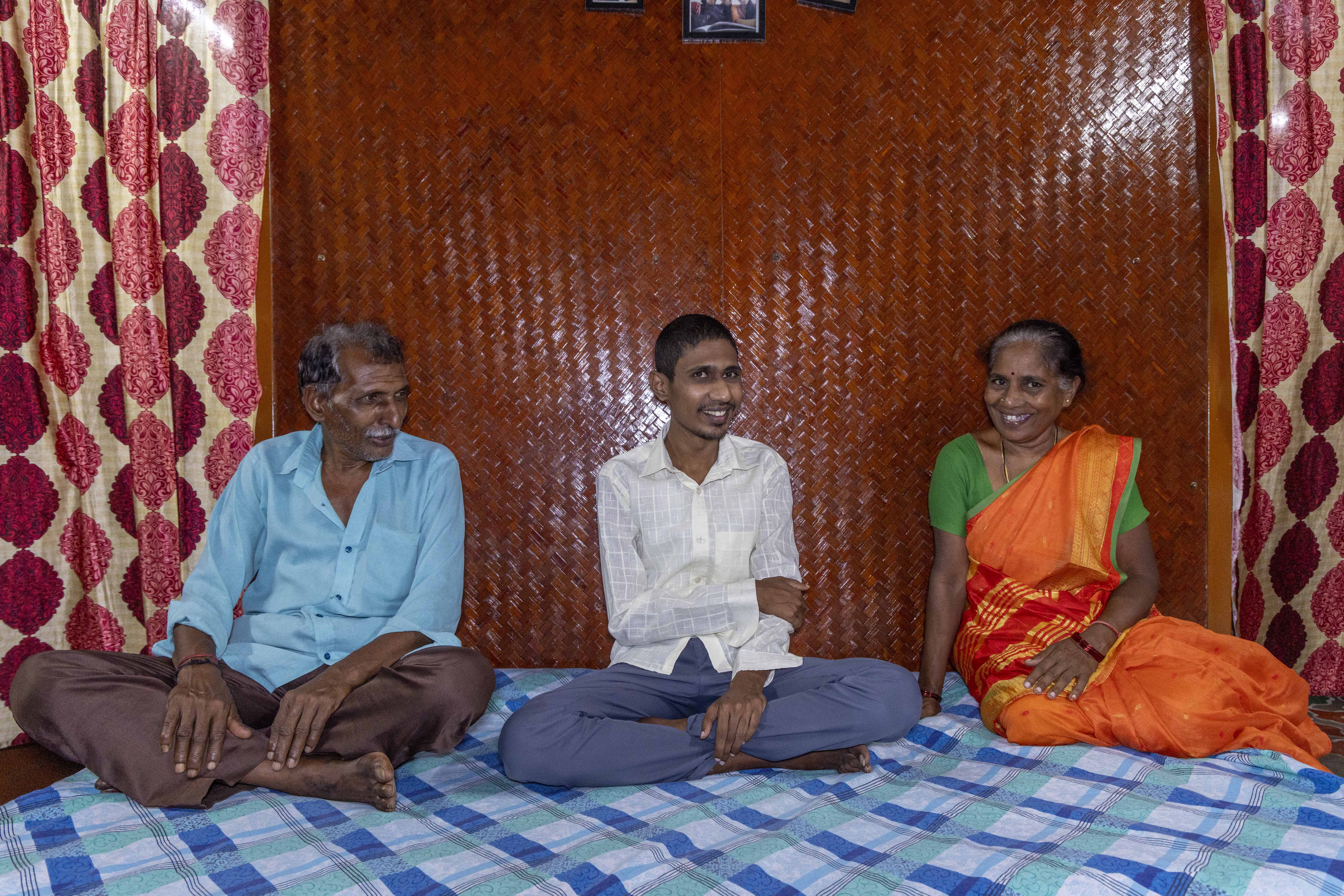

“I hope to get a government job, maybe as a gardener taking care of plants”
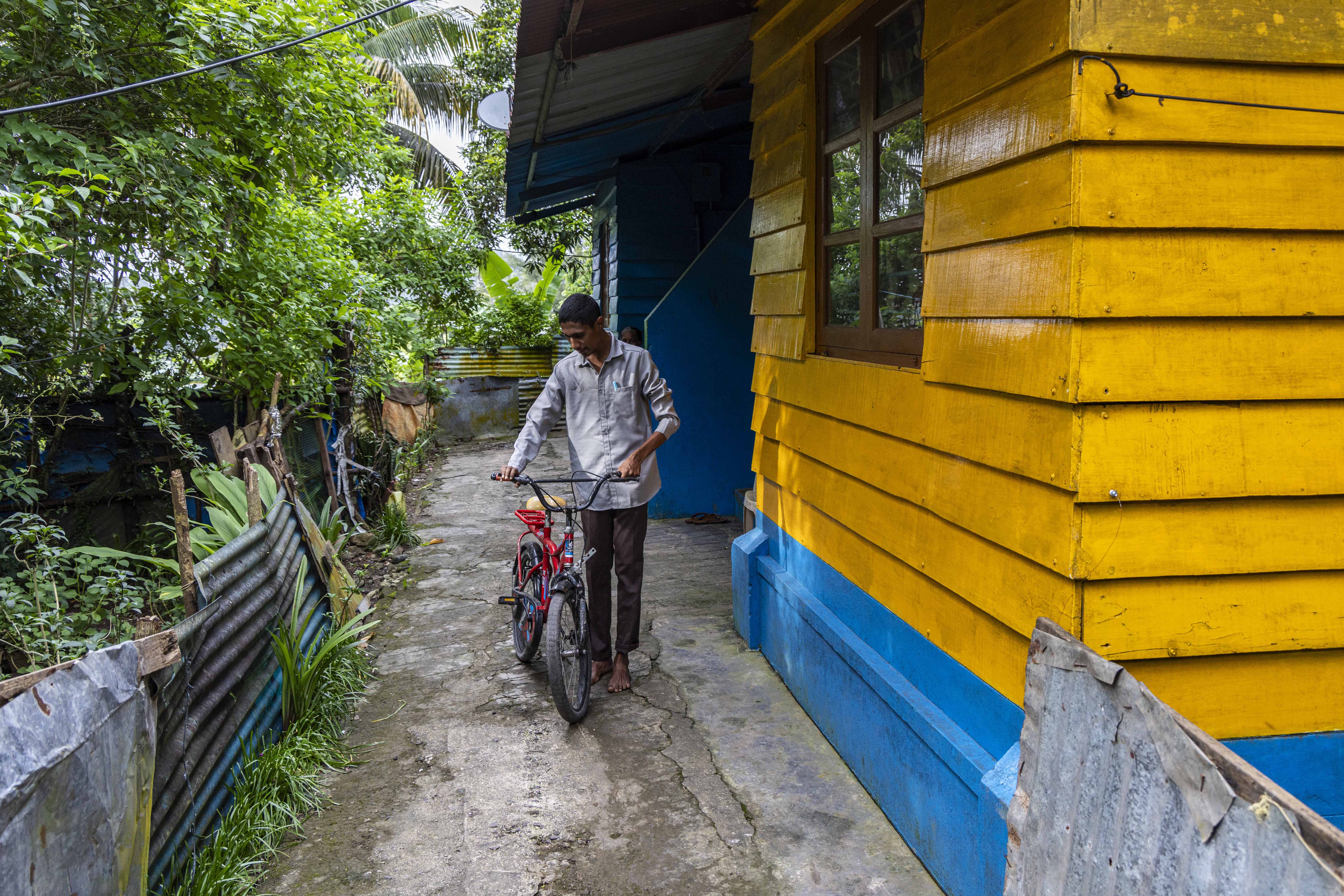
The house address of K. Parmesh (25) speaks volumes. It begins with “Tsunami Shelter”. The Andaman and Nicobar islands were deeply affected by the deadly 2004 tsunami in the aftermath of a massive undersea earthquake in the Indian Ocean which left millions dead in its wake. Among those whose lives were uprooted that December was the family of K. Satyanarayan Murthy: his wife Manga Devi, their daughters Durga and Sajni, and their son Parmesh, the youngest, who has an intellectual disability. The displaced were given temporary tin shelters, and then, permanent shelters.
Satyanarayan (60) hails from Konaseema, Razolu, Andhra Pradesh, and studied there till 10th standard. In 1981 his father came to the Andamans as a watchman in the Public Works Department (PWD). Satyanarayan married Manga Devi in 1988 and they moved to the Andamans the following year. The children or dependents of government employees who die in harness can claim an appointment to any government job – if not the same job the deceased held – on ‘compassionate’ grounds. Satyanarayan had hoped that after his father’s death he would be able to step into his shoes but that was not to be. He ended up as a construction worker in the PWD building where his father worked. Later he got a job as a dock worker, loading and unloading goods in the harbour.
As a baby, Parmesh was overweight and his parents thought that was the reason why he was slow to walk, but then his speech too was delayed. He went to a mainstream government school and Manga Devi would do the pick-up-and-drop. He struggled with writing and made no attempt to read. A teacher suggested to Manga Devi that they show him to a doctor. The doctor told them the boy had a “chota dimaag” (small brain) and recommended that he get a disability certificate.
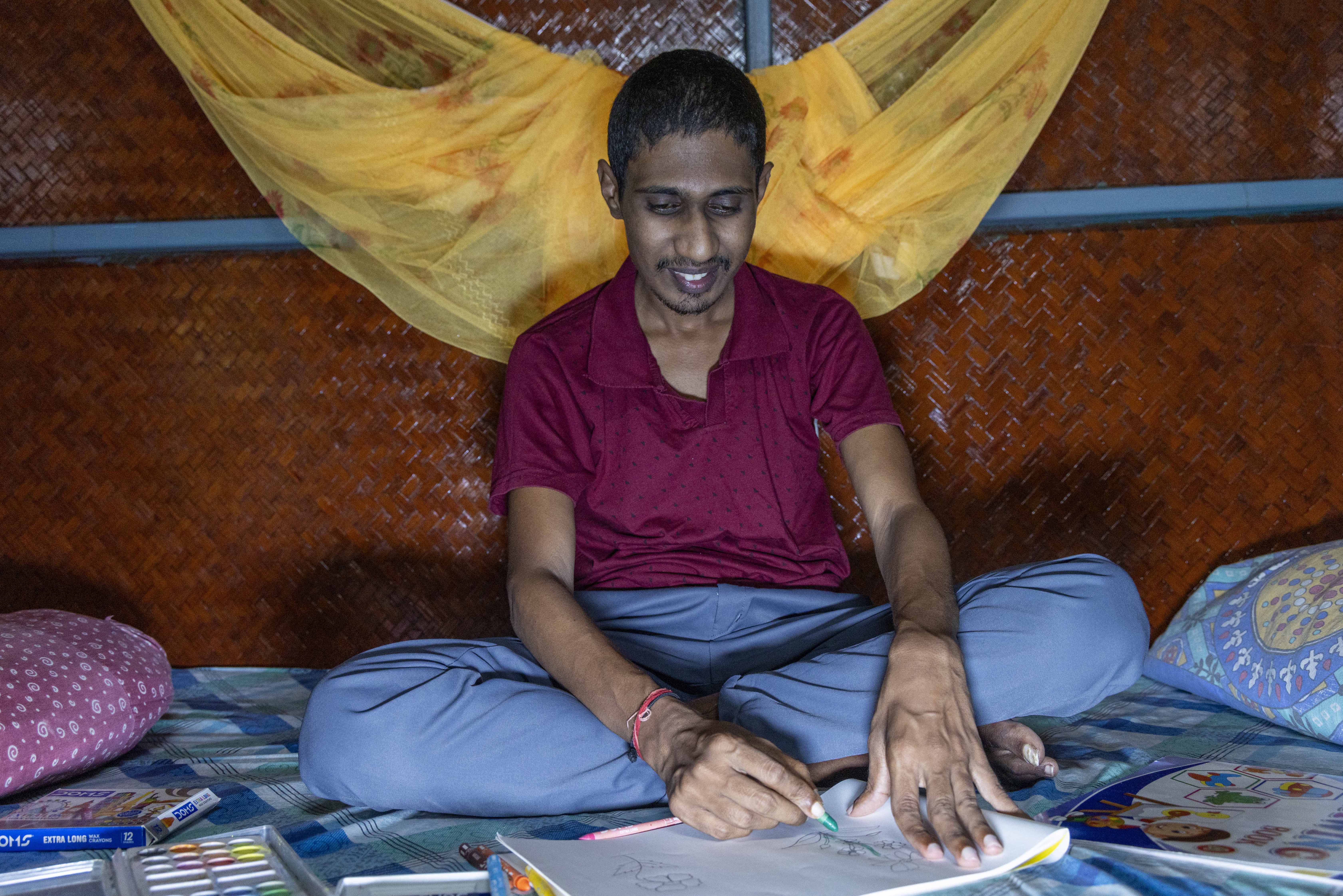
Despite his intellectual disability Parmesh made it to 10th grade and passed the exam with the help of a scribe. However, he failed in the 11th. The school advised his parents to send him to the Composite Regional Centre (CRC) which specialises in skill development for children with disabilities. Parmesh has been getting trained in CRC for the last six years, learning skills like diya-making, candle-making, and gardening. There are about 25 students, and each is taught according to their aptitude and ability. He has a certificate from CRC, which might pave the way for employment as a ‘plant caretaker’ (gardener) through the central government’s PM-DAKSH initiative for the disabled.
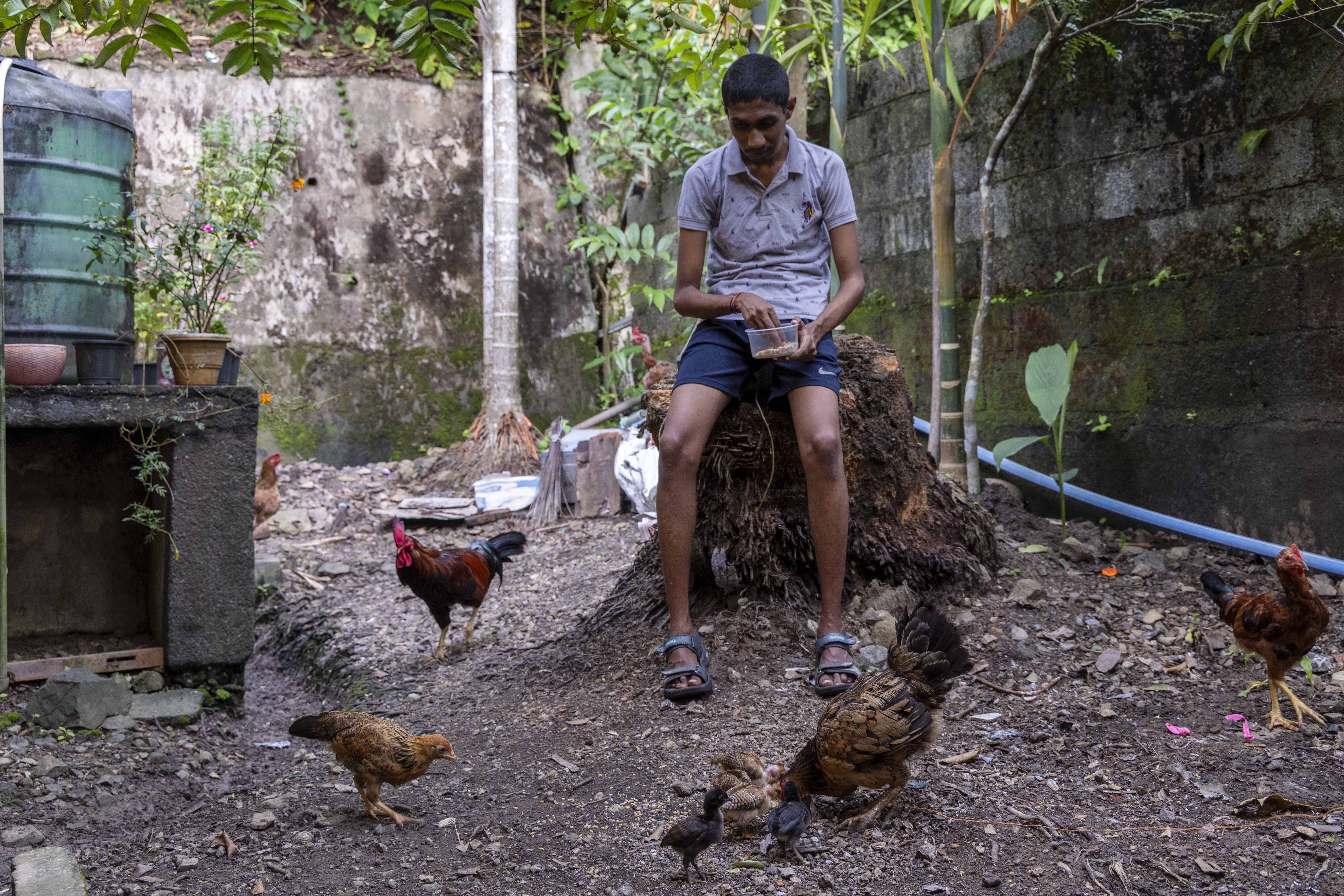
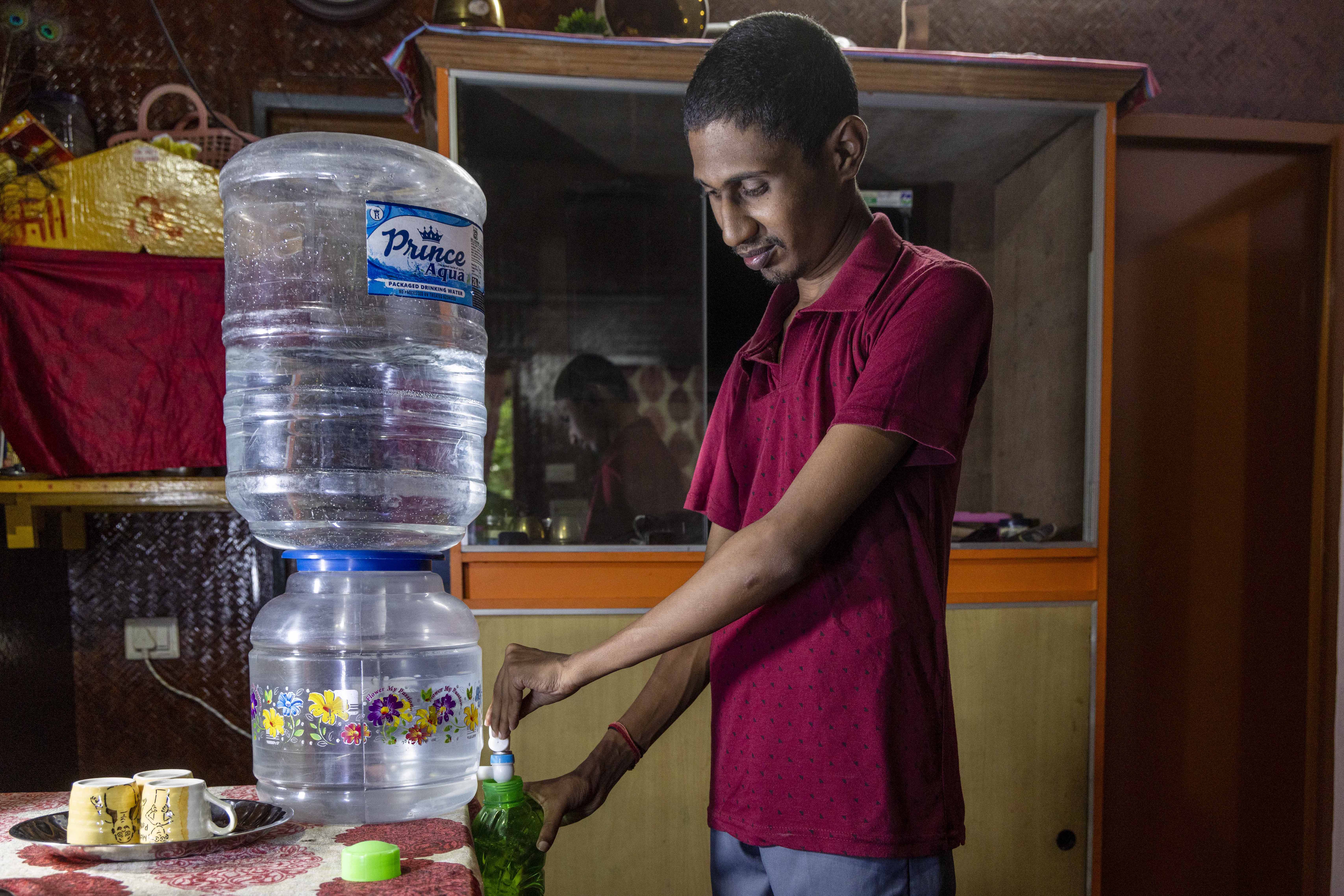
Parmesh performs all his daily activities independently. He has no friends in the neighbourhood and prefers to play with his sister Durga’s two children. Durga (34) studied up to 10th grade while Sajni (27), whose studies were interrupted during the Covid-19 pandemic, is doing her M.A. Hindi. She has also done a computer course and works on contract in an office.
The family applied for a disability allowance for Parmesh, but they submitted a flawed application which was rejected. They plan to apply again, as the allowance would augment the family income. Satyanarayan says although the tsunami shelter is not in their name, it is rent-free; however, they do have to pay the electricity and water bills. He is worried about how he’s going to arrange Sajni’s marriage since he is retired and doesn’t earn anymore. He is on the lookout for some small job that would help lessen household expenses.
Parmesh’s demands are few, says Manga Devi. He might ask her to make some special food, or buy him new clothes. He relishes non-veg foods such as egg, fish, and mutton, and enjoys watching Hindi movies and songs on TV. Manga Devi says the CRC is helping him find a job so he can earn his livelihood and look forward to an independent future.