
faiqa
faiqa gulzar , jammu & kashmir


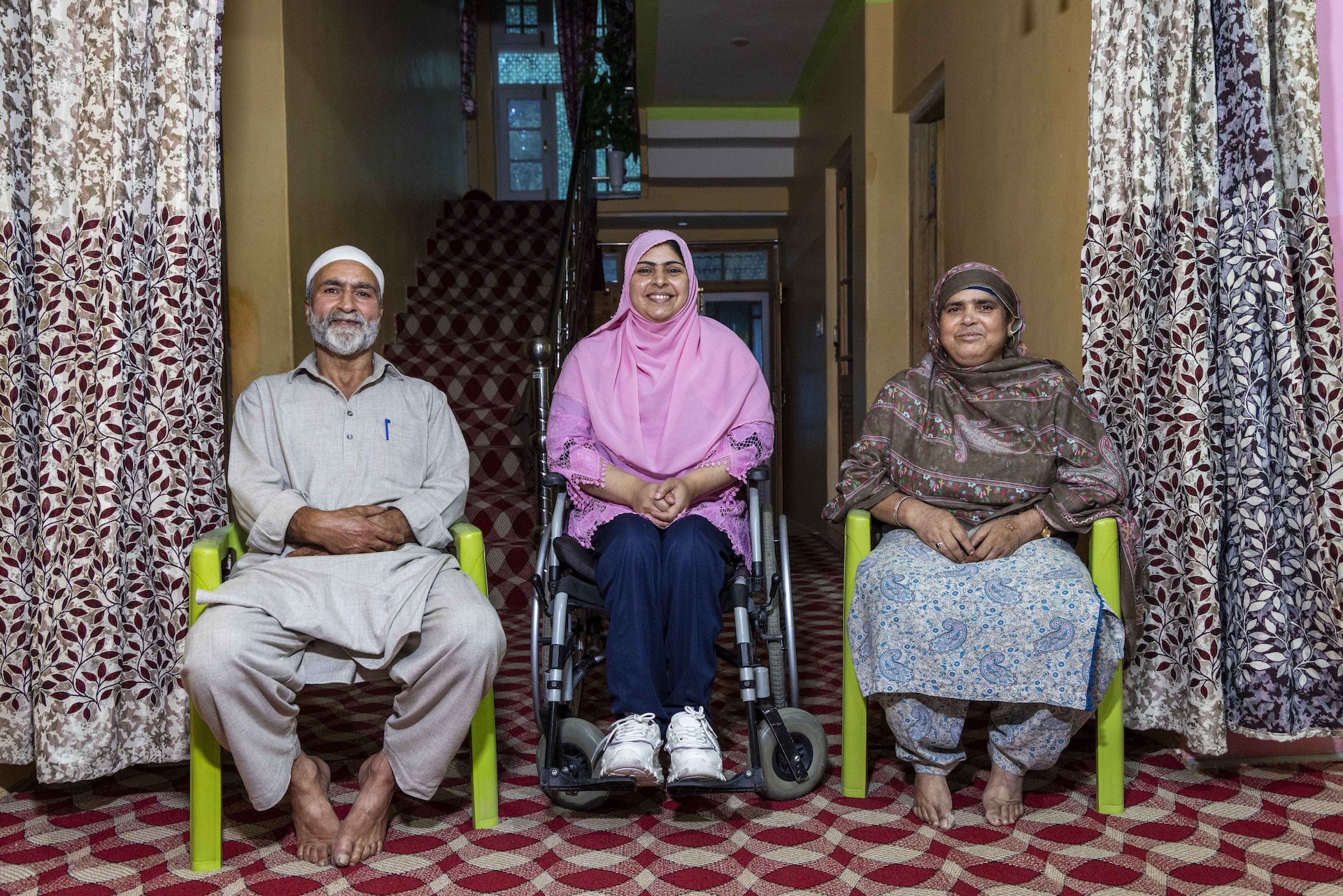
“My family never gave up on me. My disability did not stop me from doing what I love”
If you or I attempted an arm wrestling match against Faiqa Gulzar, chances are we would lose badly. This 27-year-old from Anantnag is one of the few women wheelchair arm wrestlers in Jammu and Kashmir.
Few of us are aware of para arm wrestling, a competitive sport governed by the World Armwrestling Federation. Competitors place their elbows on the pin pads on a special table and hold each other’s hands, each aiming to bring the other’s hand down to the pin pad. The competition categories are sitting, standing, body weight, and the use of either arm. Faiqa competes in the 60 kg category, using her right arm.
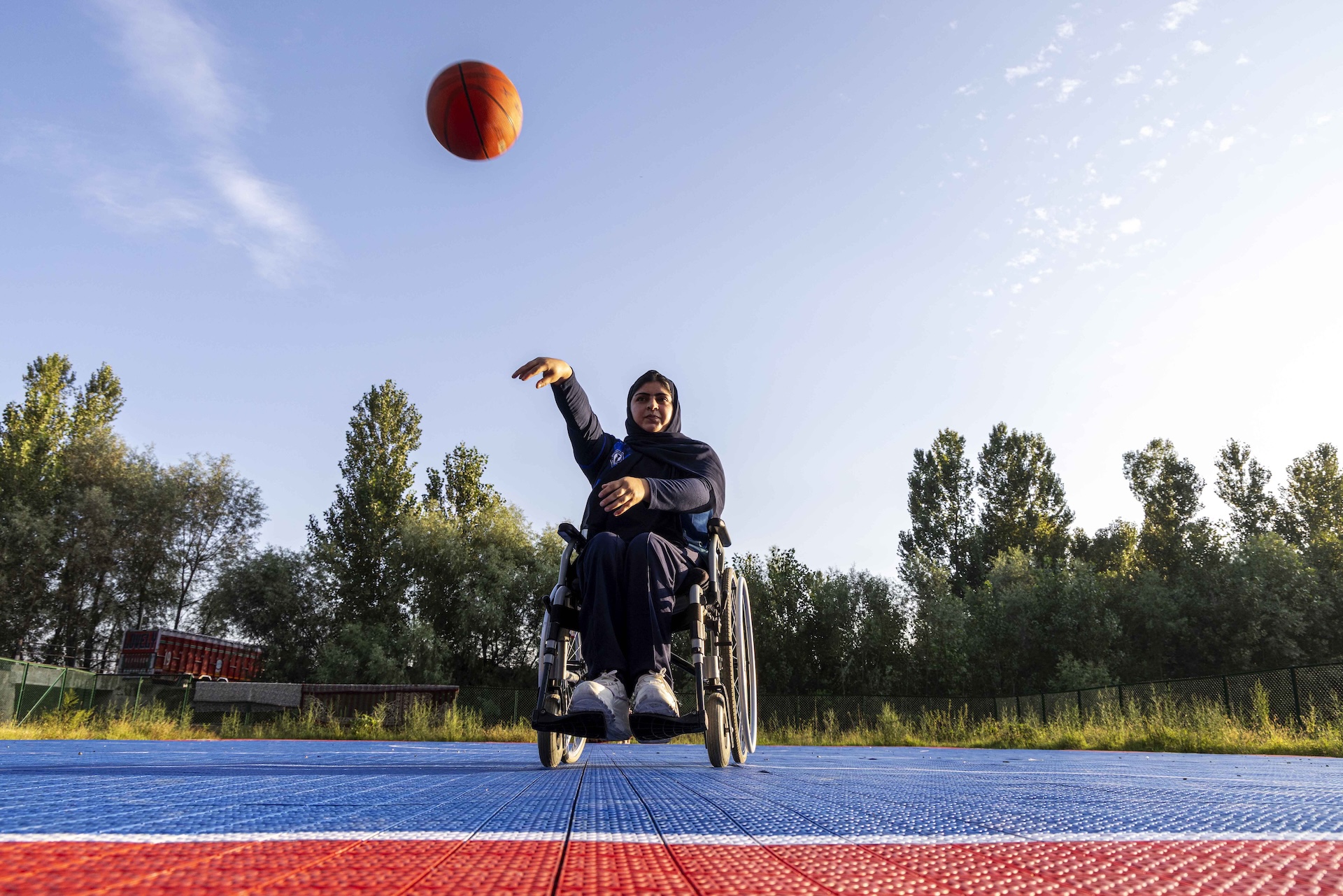
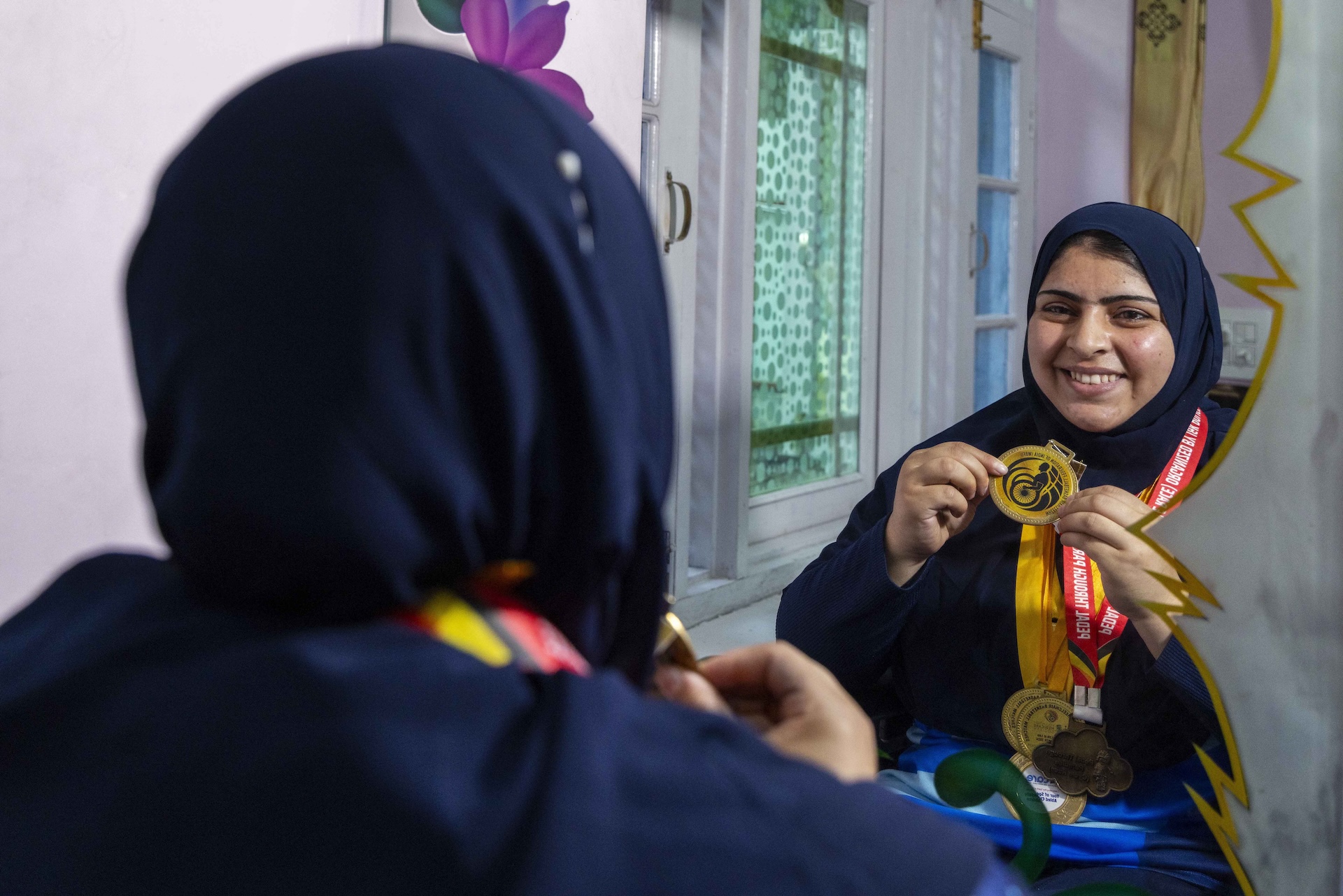
A more well-known sport in which Faiqa excels is wheelchair basketball; she is a key player in the Jammu and Kashmir team and her medal tally currently stands at four: one for player of the match, one state and one national medal, and one she earned at an international training camp in Visakhapatnam.
Faiqa is the daughter of Haseena Banu (60) and Gulzar Ahmad Ganie (62) who retired last year as a Lance Naik in the Indian Army. She was a bright student who had just passed 12th standard when her life took a dramatic turn. On 11 March 2019, while she was carrying out some routine housework, she slipped and fell from the second floor of her house. Her family rushed her to a nearby government hospital. However, the doctors there, observing the seriousness of her injuries, referred them to the Sher-i-Kashmir Institute of Medical Sciences in Srinagar nearly 50 km away.
The delay in treatment and the long waits for medical procedures such as MRI scans crucially affected her condition. At the time, her elder brother Nowhar Gulzar, a Havaldar in the Indian Army, was on leave and shifted her to the army hospital in Srinagar where she received immediate medical attention. Doctors advised urgent spinal surgery, which could not be done in Srinagar. She was then airlifted to the Army Base Hospital in Delhi.
Faiqa underwent months of treatment after a major surgery in which two iron rods were inserted into her spine. When she regained consciousness, she was unaware of the extent of her injury. The reality struck when her family brought a wheelchair home. “I thought it was temporary,” she recalls. “But when I saw the wheelchair, I realised my life had changed forever.”
Faiqa was unable to move around independently for almost three years. “I went through a very difficult phase emotionally,” she says. “Some relatives called me a burden. I felt low and uncertain about my future, but my father gave me the strength to keep going.” Courage, discipline, patience – these were the values she, and the whole family, imbibed through her father’s life as a serviceman. “His role was not just to take care of me, but also to help me believe that my life still had a purpose,” she adds.
If her father played an important role in her life, so did Padma Shri Javed Ahmed Tak who runs the Zaiba Aapa Institute of Inclusive Education in her home town Bijbehara. When she received a call from him in 2023, it was the beginning of a new chapter. “He has been a great source of inspiration for me because his life and work show that disability cannot stop a person from making a difference in society,” she says. “I want to follow that path through my achievements in sports and encourage other girls with disabilities to believe in themselves.”
Motivated by Javed’s message that people with disabilities deserve equal opportunities, respect, and the chance to prove their abilities, she joined a training institute in Voluntary Medicare Society (VMS) in Bemina, Srinagar and began playing wheelchair basketball. “Before the accident, I wanted to become a teacher,” she says. “Now, I want to represent my country in basketball.” She adds that sports gave her confidence, strength, and a new purpose in life. “For me, sports are not just about winning medals; they are about inspiring other people with disabilities and showing them that life doesn’t end after an injury. In fact, a new journey can begin.”
Gulzar Ahmad’s heart swells with pride as he talks about Faiqa. “What I admire most about her is that her heart is full of courage,” he says. “No matter what life has put her through, she continues to move forward.” He has got their house modified with ramps and a bathroom with wheelchair access. “I am with my daughter, shoulder to shoulder,” he tells us. “Whatever she wants to do in the future, I will stand beside her.” Speaking for the entire family he says, “If Faiqa is happy, we are happy. If she finds joy in playing, we want her to continue.” Gulzar observes that although she hasn’t received the kind of substantial government support they had hoped for, they continue to provide everything she needs to progress.
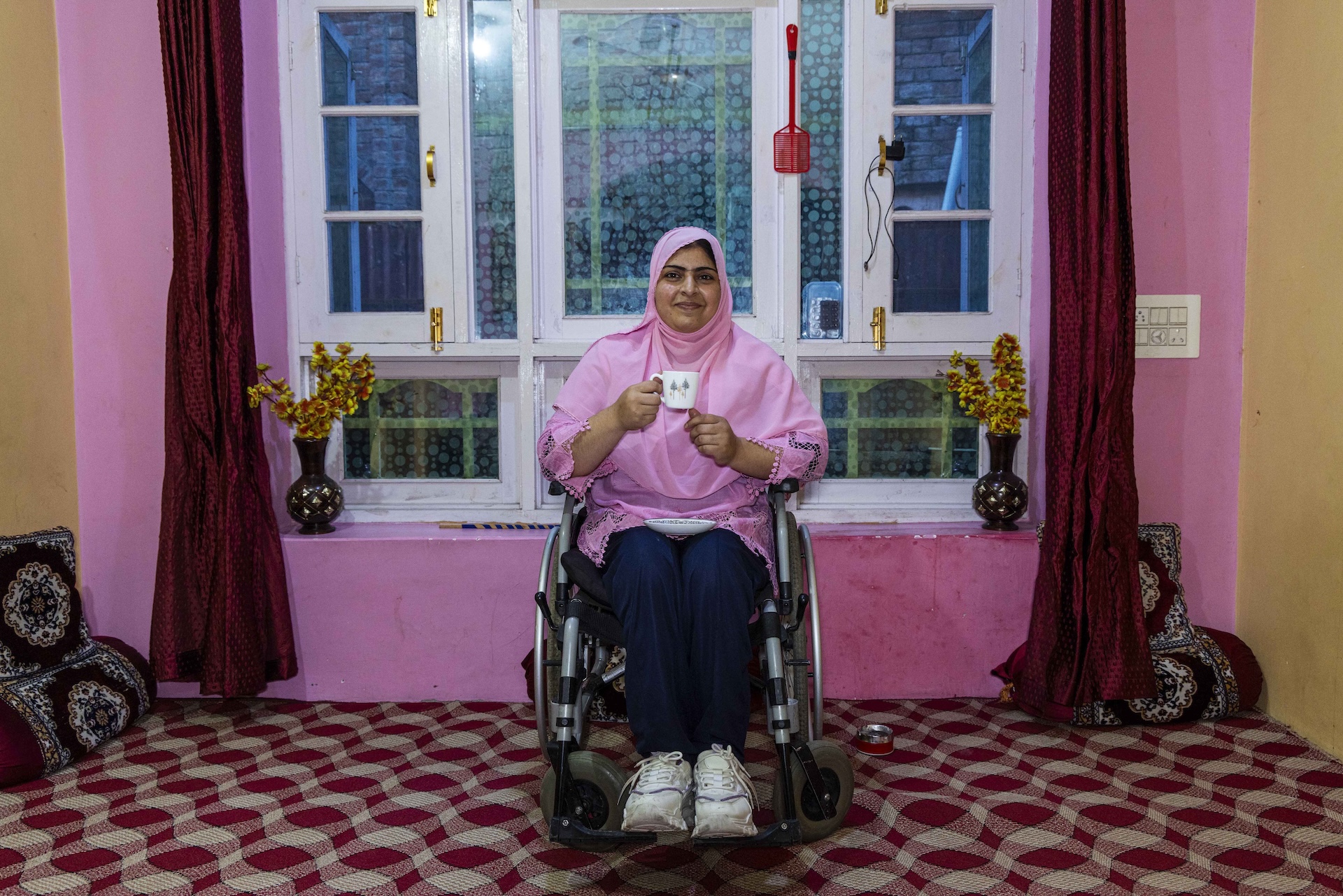
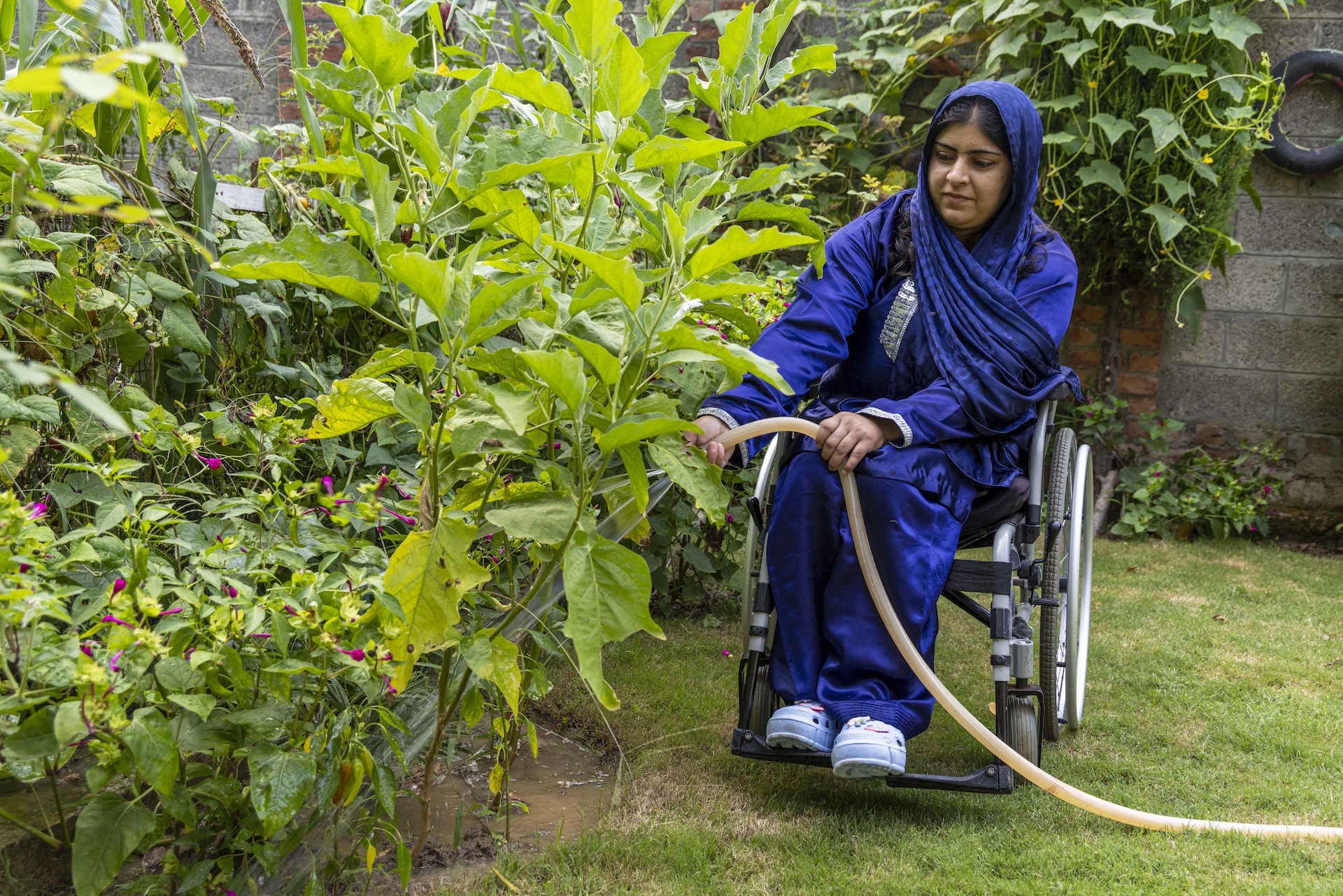
Faiqa credits her family’s unwavering support for her strength and survival. Her elder sister Tajalee is married and her younger brother Faisal is a shopkeeper. Faiqa manages her daily needs independently; she plans to purchase a car to further enhance her mobility. She spends her day practising and preparing for sporting events. “Every day is an opportunity to learn something new,” she says. She was quite forthright about wanting to get married, and her intent to continue playing basketball afterwards.
Her message to parents with children with disabilities is: “Support your children and give them opportunities. Don’t hide them away. Stand by them and help them achieve their dreams.”