
d.
d. ronak , andaman and nicobar

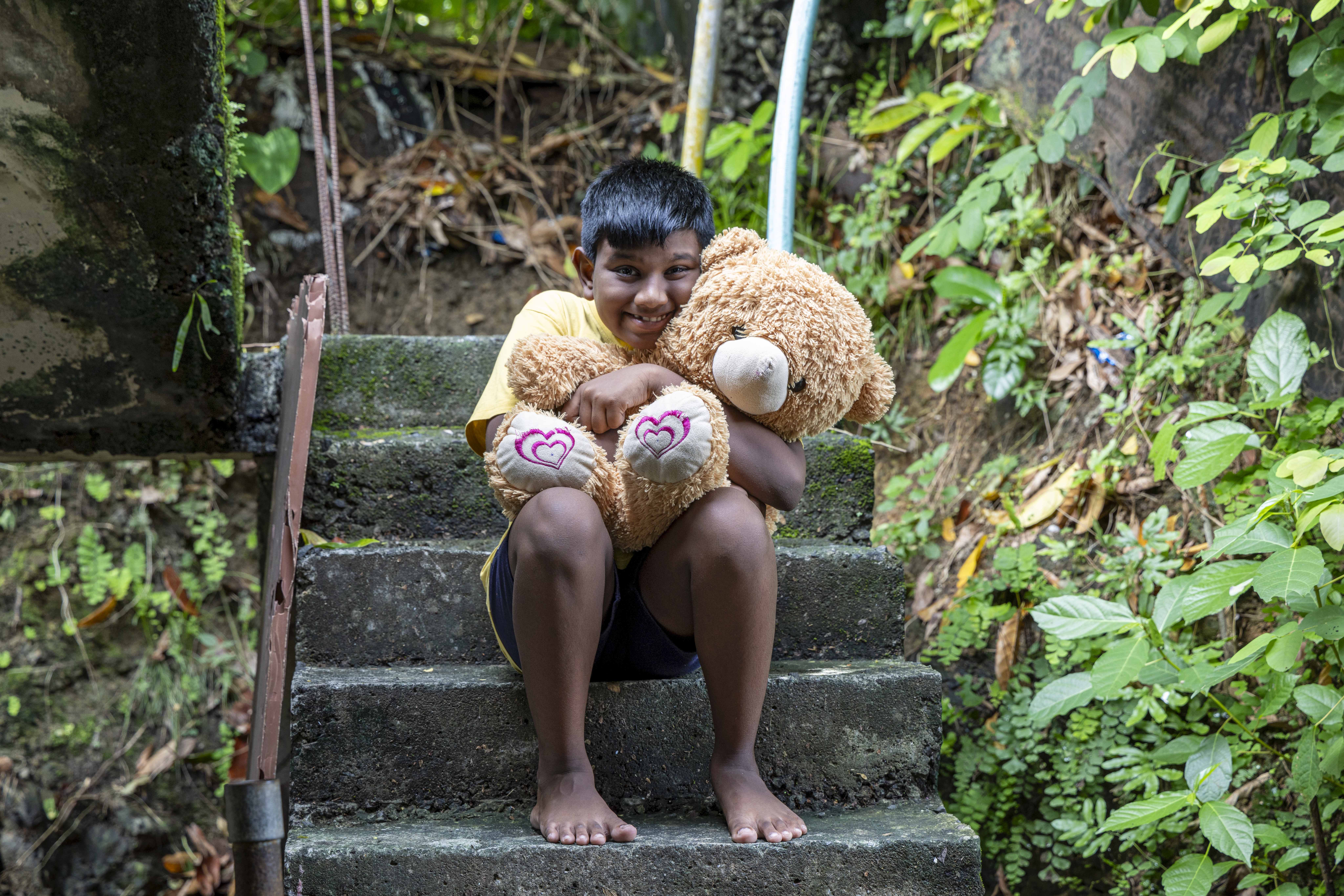
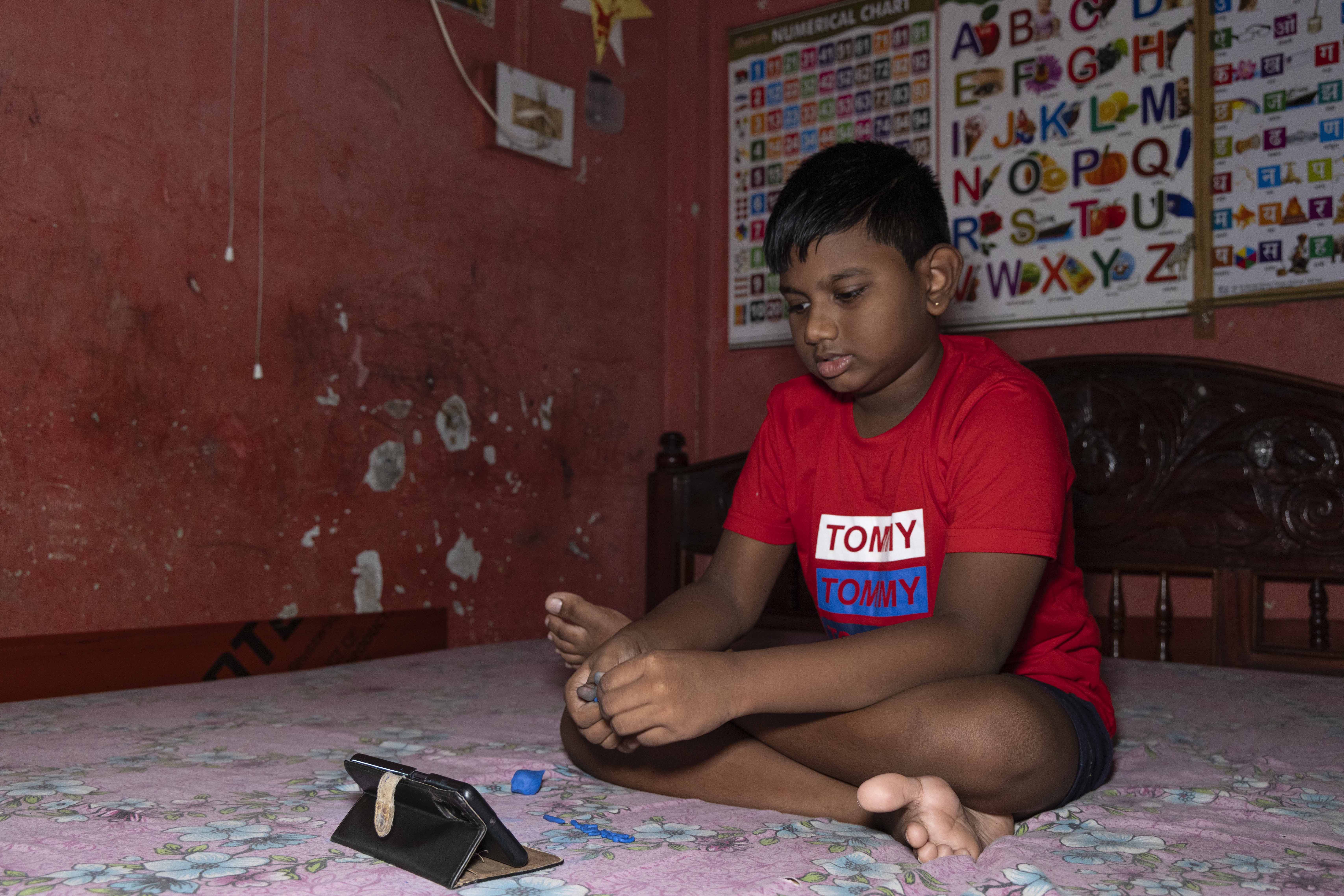
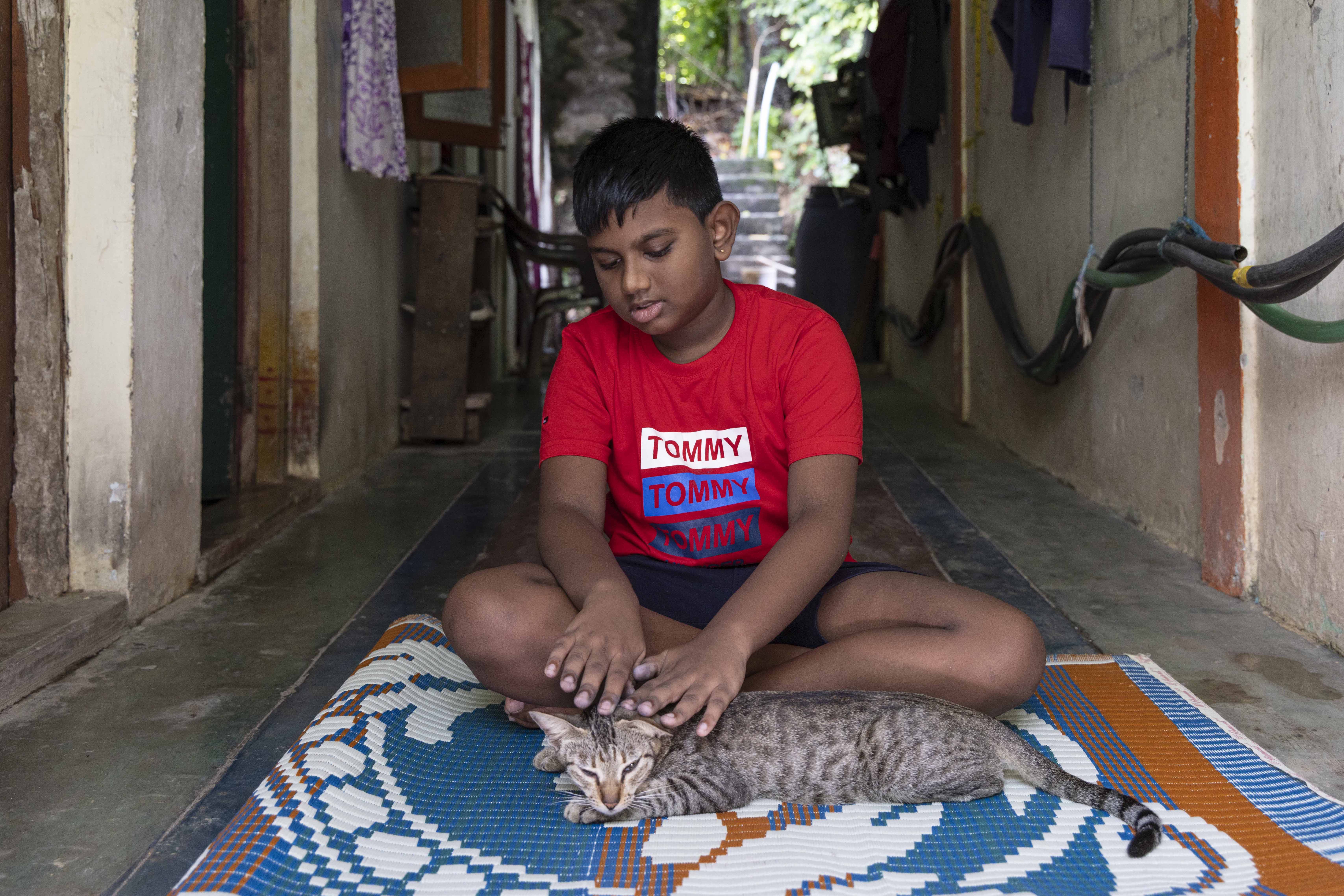
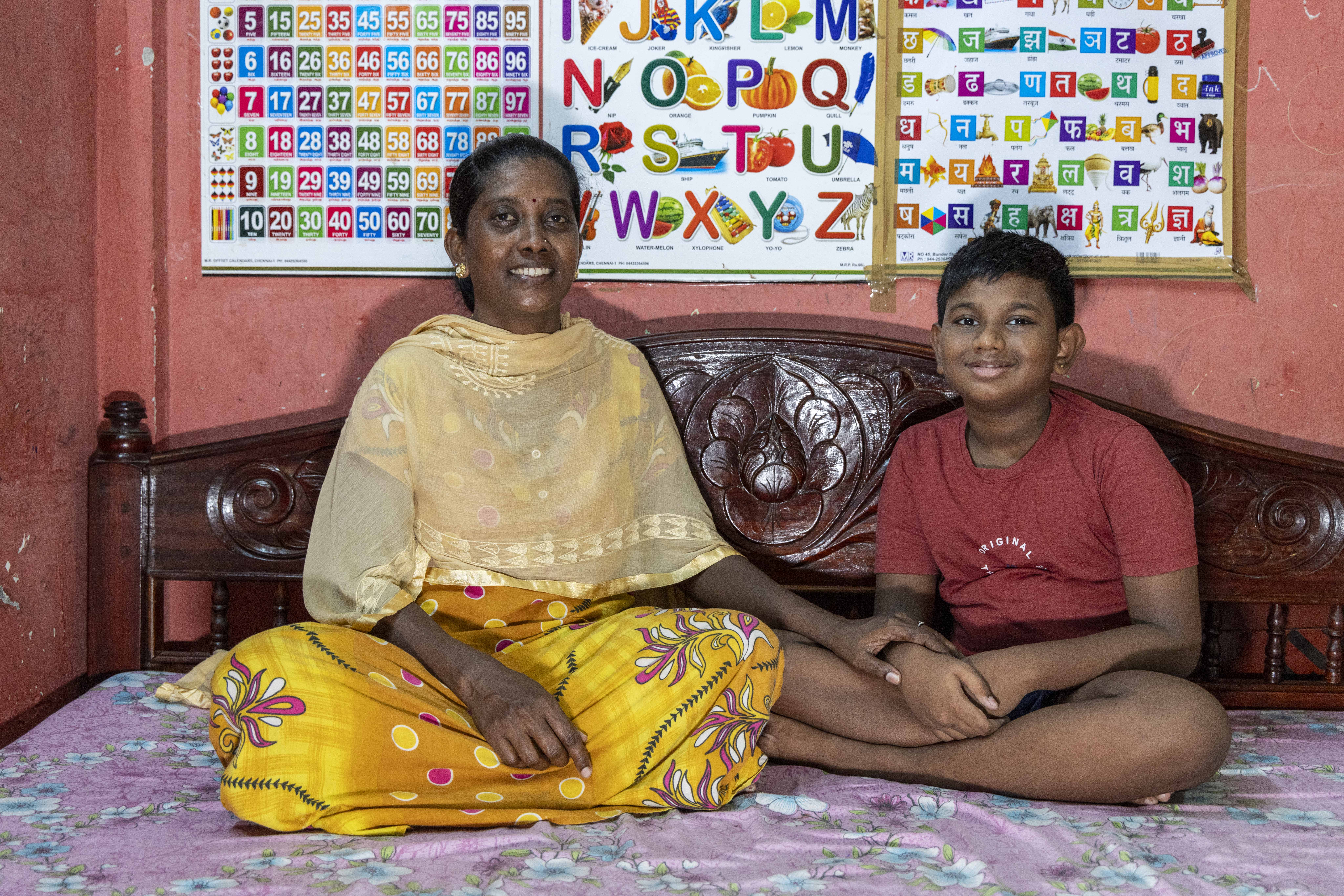

“I just love working with modelling clay! I don’t like to try out new, unfamiliar food”
One day, in 2018, Sheela Vasanti was kneading atta dough to make roti. Her son Ronak, just three-and-a-half, asked for some. When she gave a ball of dough to him he started moulding it into letters of the English alphabet! Narrating the incident, Sheela (42) said, “That is when we knew he had a keen interest in copying the shapes of letters.”
The year 2018 was a tough one for Sheela: she lost her mother to breast cancer and Ronak was diagnosed with Autism Spectrum Disorder (ASD). Many autistic children are hyper-reactive to what they experience through their senses (sound, touch, smell etc). One of Ronak’s sensory issues is a fondness for manipulating soft or pliable material. Even today at age 12 he likes nothing better than sculpting letters with plasticine (modelling clay) – in no less than five languages!
Sheela and her husband D. Dileshwar Roy (45), residents of Port Blair in the Andamans, had never heard the word ‘autism’ before. Sheela had a job washing dishes in a school canteen (she quit 10 years ago to take care of Ronak) and Dileshwar, now a cook in a navy canteen, used to work in a hotel. Ronak was born in Garacharma Government Hospital in October 2014. The couple had taken three-year-old Ronak to a doctor in a private clinic because he had a fever but once he got there he just wouldn’t stop screaming. The doctor asked them a series of questions starting with “does he talk?” and “does he play with other children”. To each question their answer was “no”. The doctor, noting the child’s extreme distress, hyperactivity and repetitive behaviour, asked them to go to the National Institute of Mental Health and Neurological Sciences (NIMHANS) in Bangalore. There he was formally diagnosed with ASD and the family stayed for around 15 days during which the parents were given guidance on daily training, learning methods, and behaviour management.
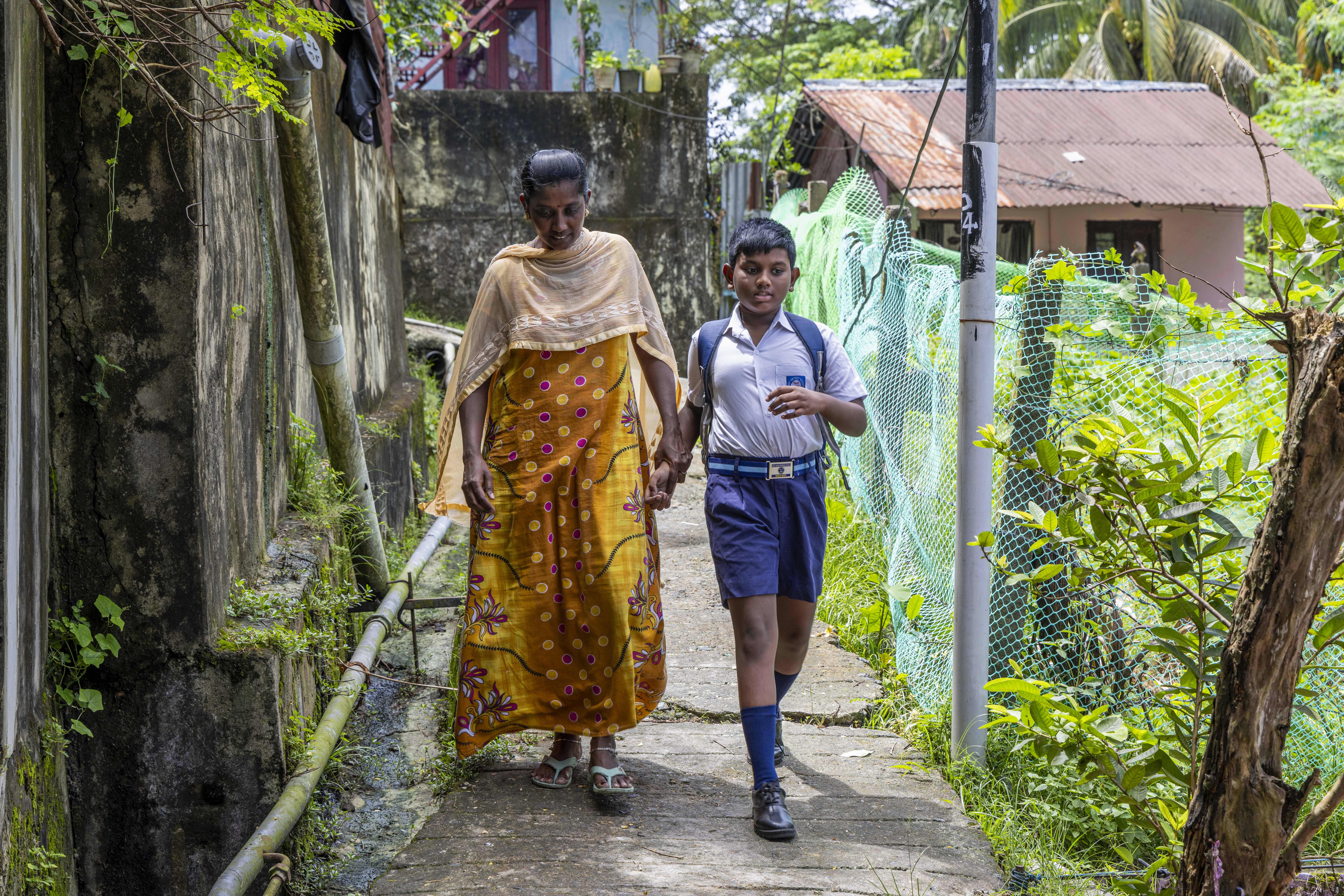
On their return, Sheela and Dileshwar lost no time in carrying out the NIMHANS guidelines. They continued home-based training using educational videos. Ronak started school late because of his developmental delays. He joined the Government Senior Secondary School in Bathu Basti, where his sister Kavya studies; he is now in Class 4 and she, in Class 12 in the Science stream. Ronak attended the Composite Regional Centre in Brookshabad for therapy sessions. “Yogavati, a special educator, helped Ronak a lot in his studies and provided support and training,” said Sheela. “He needs regular occupational therapy but unfortunately there is no therapy centre near where we live.”
Ronak is uncomfortable in unfamiliar surroundings, and reacts badly to loud noises. He does not like to try out new dishes and prefers to stick to familiar ones; fish curry and instant noodles are what he most relishes. His social interaction is limited, and he names just one friend in school: Adarsh. His speech is a bit unclear and limited to two or three words at a time, like ‘I want food’ or ‘Want water’, but he is good in basic mathematics, says Sheela.
At home, Ronak has fun watching cartoons (“Mr Bean” is his favourite), and movies (“Secret Superstar” and “Bhool Bhulaiyaa”). His parents have given him a range of activities to choose from: drawing, construction sets of building bricks, ball and paper cups (tapping it from the top of one upturned cup to the next), and so on. But his all-time favourite is plasticine. “He loves to form letters, copying words in different languages – English, Hindi, Telugu, Tamil, Malayalam,” says Sheela. “Once, he was watching a Tamil poem on YouTube where the lines were spelt out as captions. He was able to copy the four-line poem!”
It looks as though some special skills lie buried within Ronak, waiting to be discovered. And since his parents have done everything to bring out the best in him, it may not take long before we find out.