
bindeshwari
bindeshwari and bindya lakra , andaman and nicobar

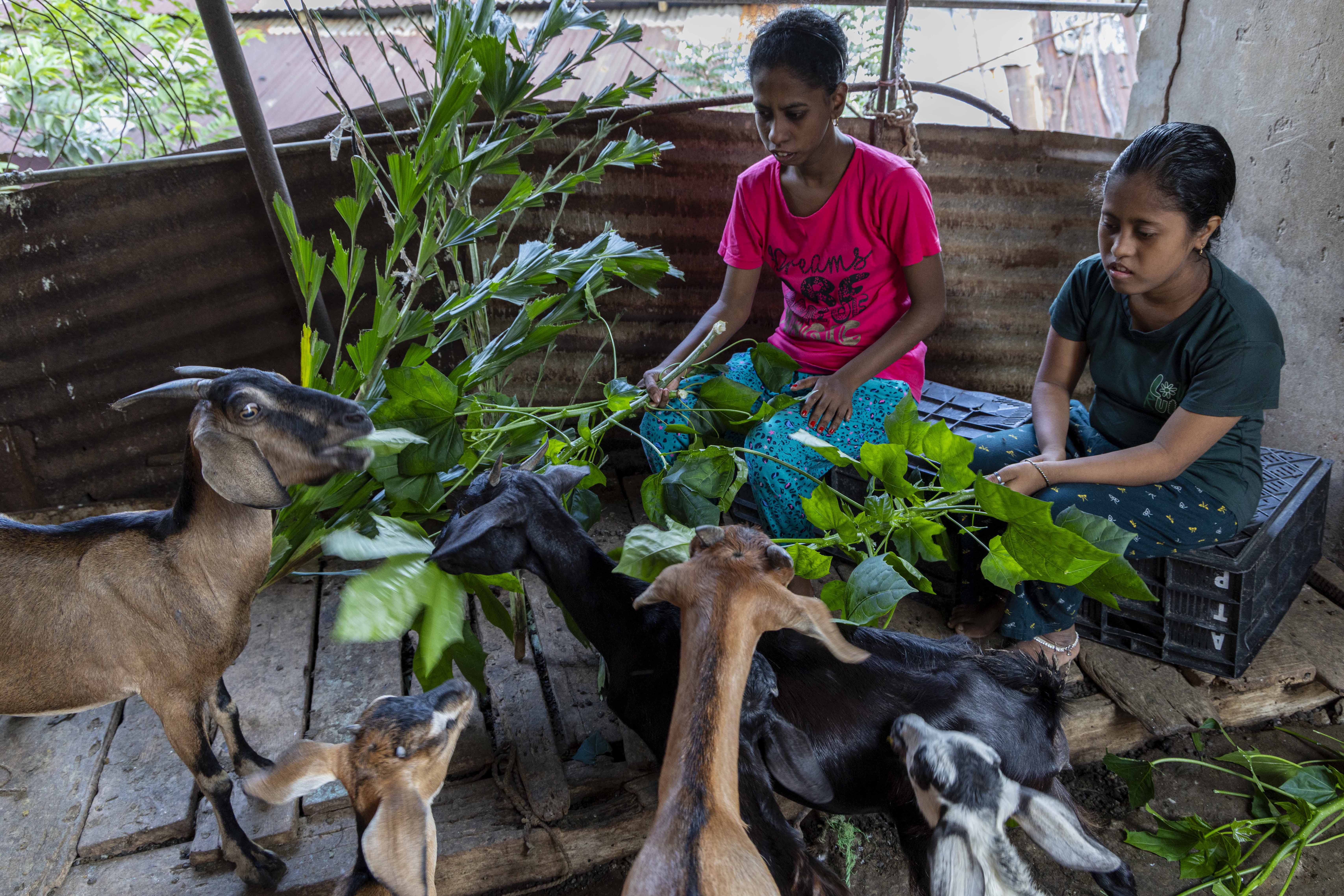
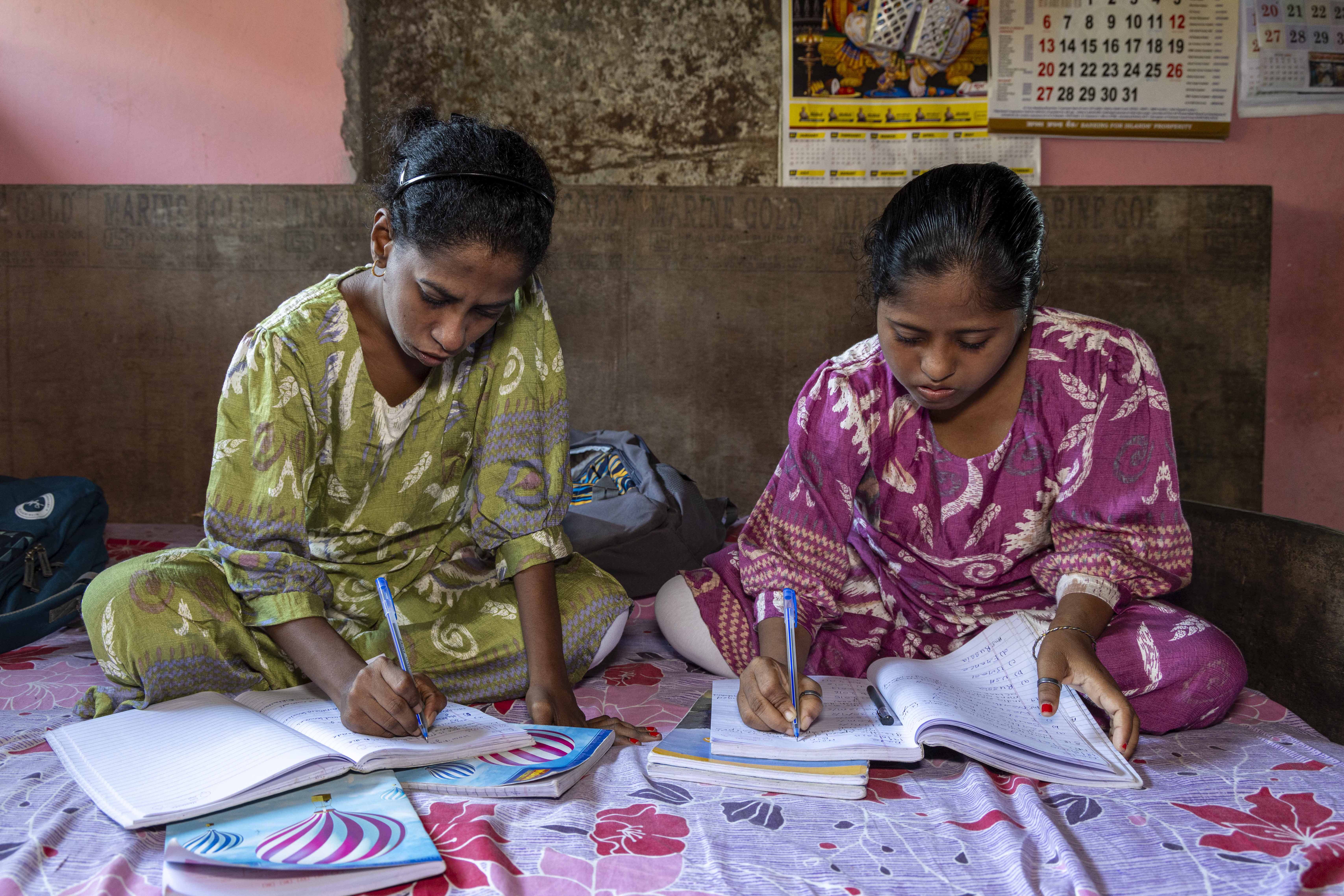
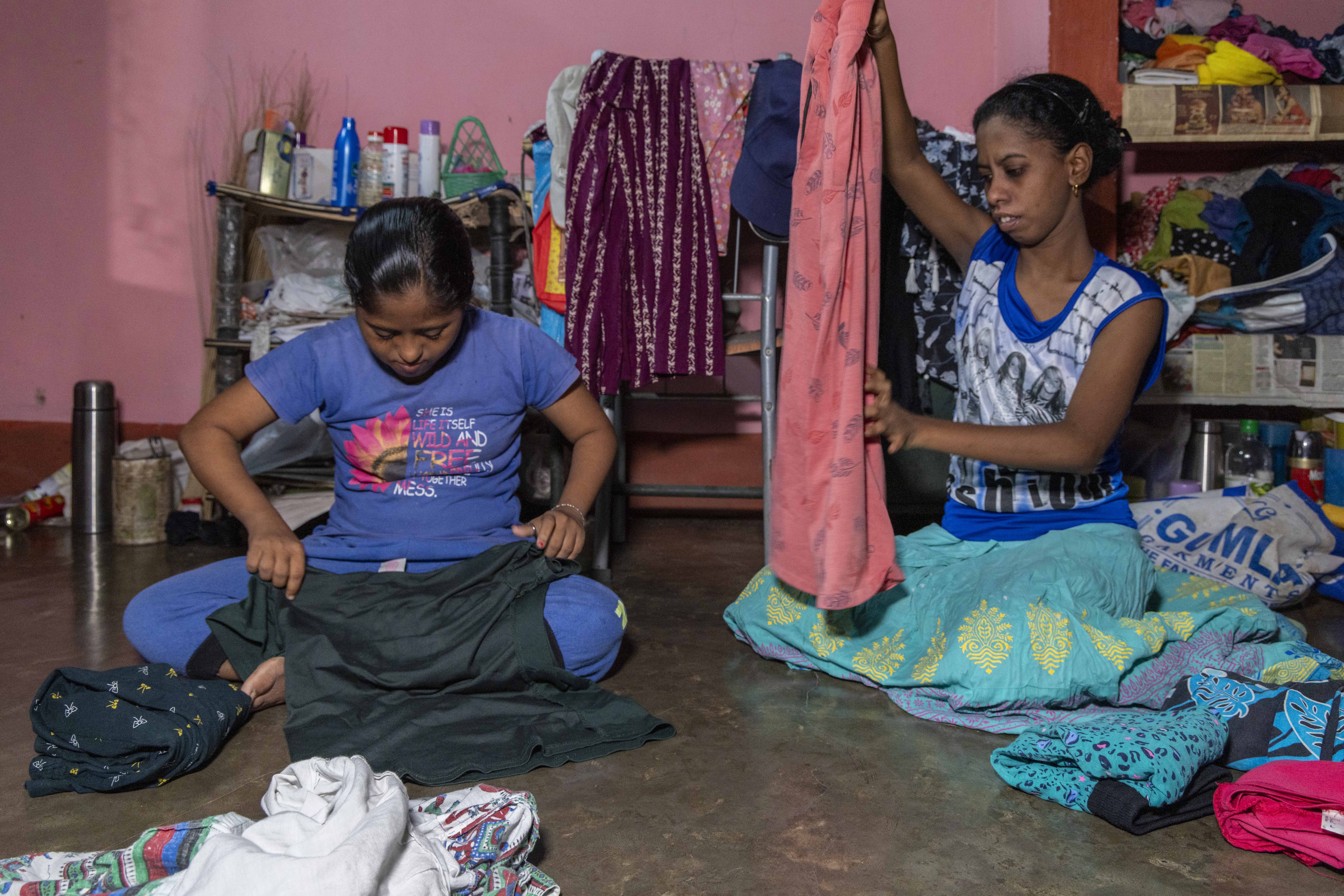
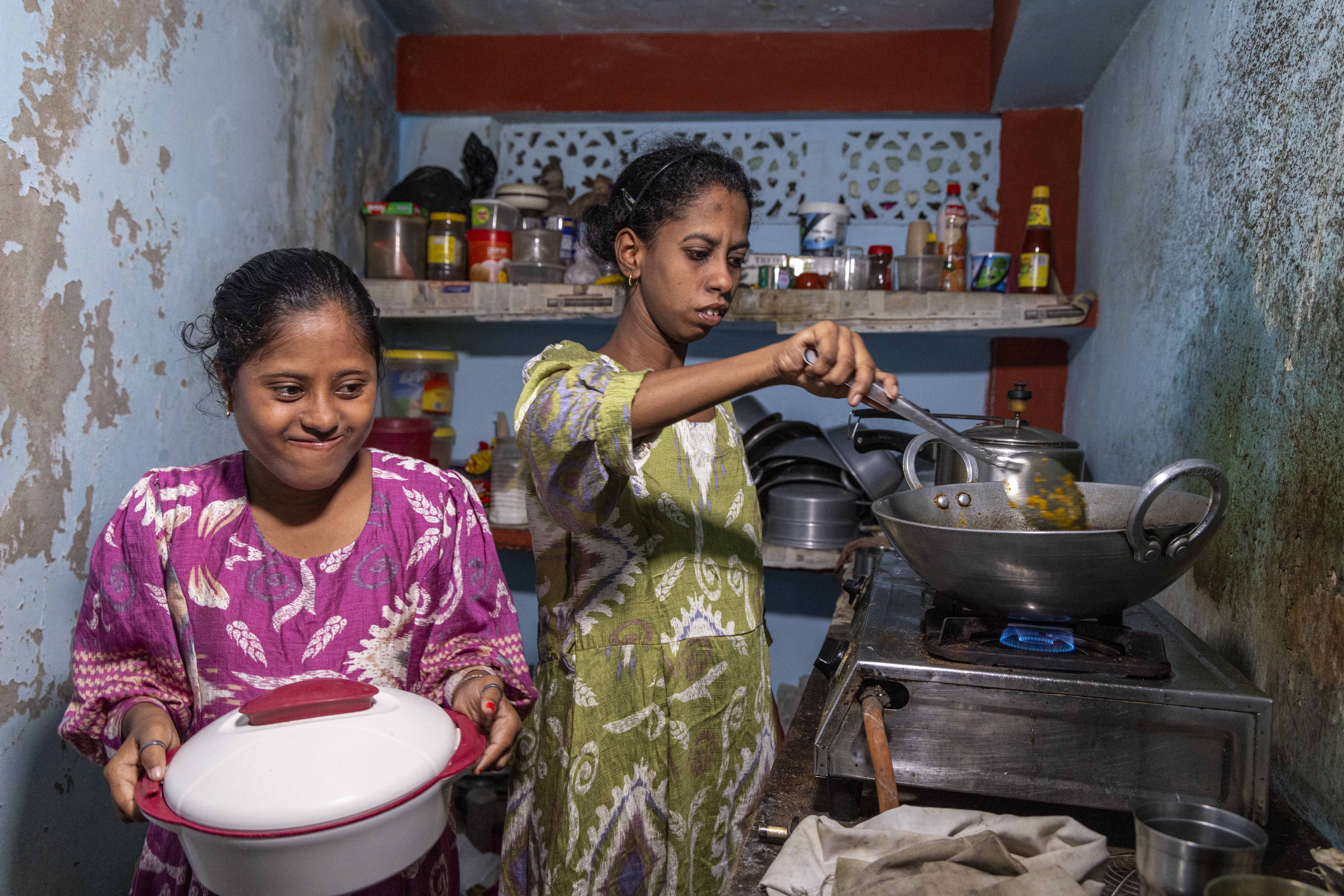
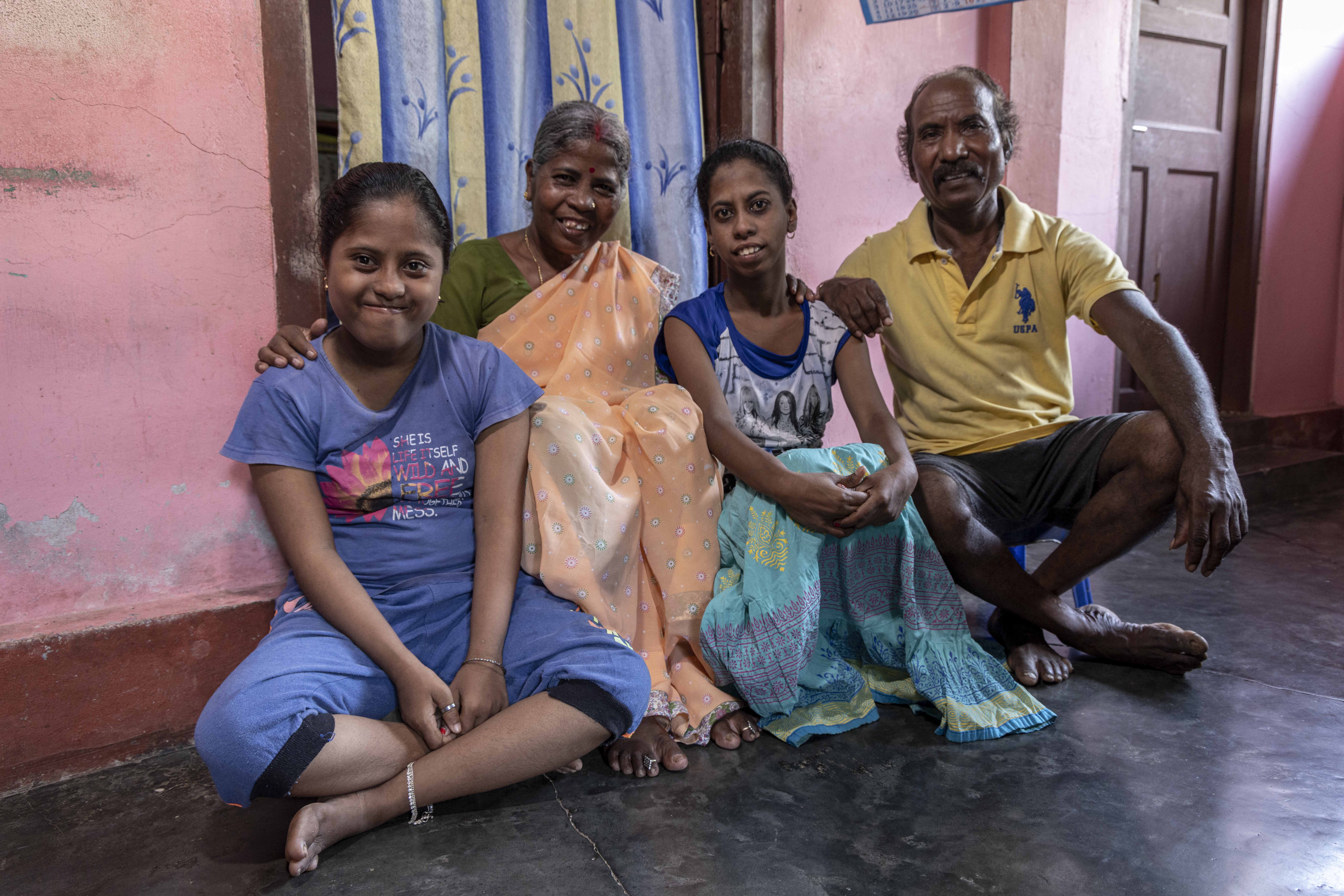

“We fight over who will get the chance to use the mobile phone! We like going out”
Phoolmani Devi (47) and her husband Baleshwar Lakra (50) from Port Blair showed admirable strength to rise up to their parenting roles despite being knocked down by tough times over and over again.
Baleshwar has had no formal education and works as an attendant in a government official’s home. Two years after their son Birender was born, Phoolmani gave birth at home to twin girls in the eighth month of pregnancy. One died of a fever after three days. The other, Bindeshwari, kept falling ill and when people told the couple her dead sister was calling her, they performed a ritual. They made a doll out of banana stem and leaves and buried it along the grave of the dead baby, after which they believed their daughter stopped falling ill.
Pretty soon the parents noticed that Bindeshwari’s development was delayed. She had much difficulty walking and they started massaging her legs with cooking oil. Someone suggested fomentation, so they would apply hot cooked rice to her limbs, and eat the rice afterwards since they couldn’t afford to waste a single grain. She started walking only when she was four. Meanwhile, she wasn’t talking or responding to sounds, so they took her to a government hospital where she was diagnosed with deafness. Her Intellectual Disability (ID) was discovered even later.
The couple started thinking about Bindeshwari’s future. Who would look after her? Birender wasn’t involved in his sister’s daily needs, and after he got married, there was no guarantee he would take care of her. Why not try for another baby who might perhaps turn out to be a support for their daughter? When Bindeshwari was seven, Bindya was born. They did not imagine that she too would have ID, besides hearing and speech impairments.
Two daughters with multiple disabilities would have reduced many an individual to helplessness and despair, but not this couple. Of course Phoolmani cannot help occasionally asking “why did god do this to me?” but neither she nor Baleshwar faltered even for a moment while caring for their daughters. Despite their strained finances, they admitted Bindeshwari to a private school which had children with disabilities. After seven years, however, Baleshwar found she had barely made any progress and shifted her to a government primary school.
At the age of 12, she was admitted to Class 1. At first the school feared she might physically harm the other kids since she was so much older, but Baleshwar assured them he would be fully responsible for her behaviour. He took leave from work and stayed with her during school hours. A relative also took turns to help him out. After two months, the school realised she was ‘harmless’, and from then on, it was smooth sailing. “The teacher was really nice,” says Phoolmani. “She told the other children to be more considerate to Bindeshwari. They all helped her.” Children are automatically promoted till Class 8, and so was Bindeshwari. “She can copy text, and writes very fast,” says Phoolmani. She failed Class 9, switched to open schooling, and wrote the Class 12 exams with the help of a scribe in 2025. Bindya cleared Class 10 in the same school.
The ‘girls’ are now 27 and 20 and their brother, 29. Birender is single, and works in a private firm. For a year now the sisters, acting on the recommendation of their schoolteacher, have been going to the Composite Regional Centre (CRC) in the Andamans which focuses on skill development and rehabilitation of disabled persons. Phoolmani takes them by bus to CRC where their day starts at 9.30 a.m. To save on bus fare, rather than return home Phoolmani remains there till 3 p.m. and they all take the bus back to reach home at 4 p.m. Out of concern for their safety, she doesn’t want them to travel on their own.
Phoolmani says at some point an ‘agency’ approached them to teach Bindeshwari sign language and she started going to the centre. However she quickly lost interest. Bindya communicates with her through gestures. Phoolmani complains, “They were better off without the mobile.” She says before Covid struck, Bindeshwari used to make paper cutouts and playact as if she were stitching clothes, but since they got a mobile during the pandemic, she only likes to watch reels and play games on the mobile. Bindya is also addicted to it and both sisters fight over whose turn it is to use it.
Bindeshwari is good at drawing and colouring. The sisters love going out. In the market, Bindeshwari insists on selecting her own clothes. They can both cook, but they need supervision because they don’t know when to switch off the gas, says Phoolmani. Baleshwar is more protective and does not let them do things unsupervised, but his wife feels they need to be pushed to do their cooking independently.
“If they can get government jobs and someone to look after them, that would be so nice,” says Phoolmani with a sigh. Both parents say with one voice: “It is God’s will. We will look after them as best as possible till our last breath.”